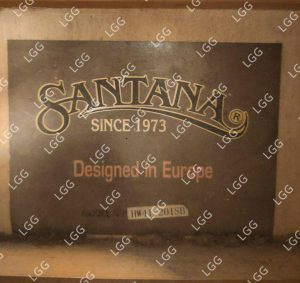
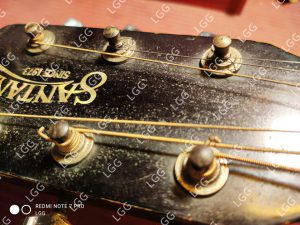
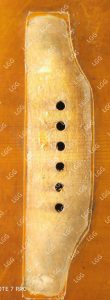
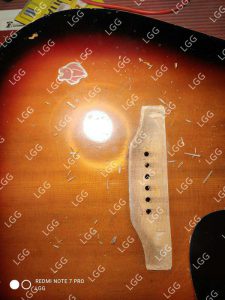
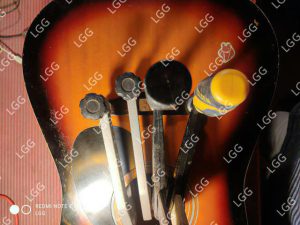
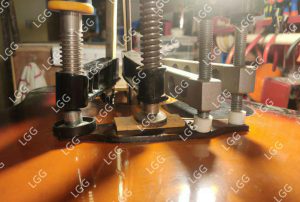
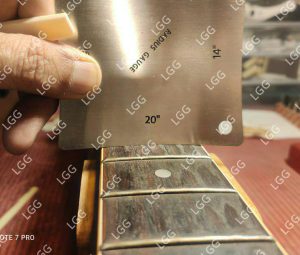
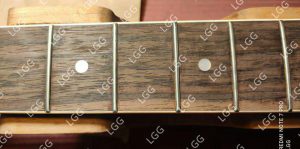
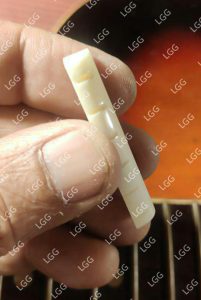
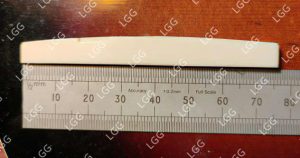
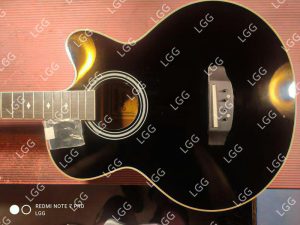
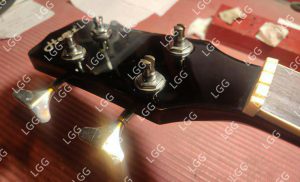
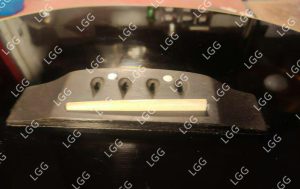
It is now 1 AM on Sunday, June 19th, as I begin to write this post. Till now I had been searching!
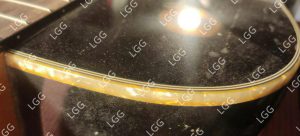
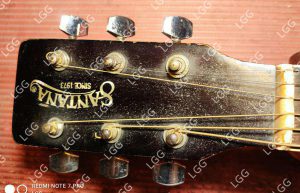
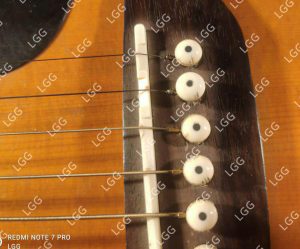
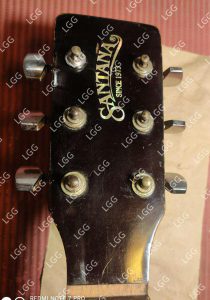
I had worked on this guitar some time back. It was an Epiphone Dove. No matter how hard I have tried searching my blog, I haven’t been able to find a post detailing what I had done to it before.
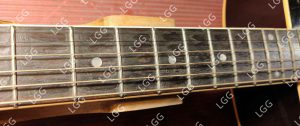
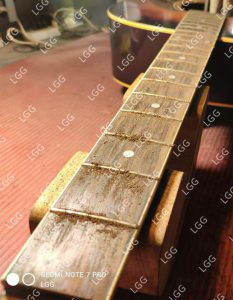
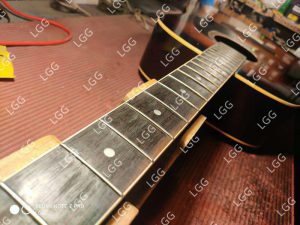
My idea was that I would share the link here and then with three or four fresh photographs, recount what was happening now. And so, this post has just three photographs!
I even called up the owner asking him to send me the link which I particularly send to the owner of the instrument that I work on. He could not find it either.
Just a few minutes ago the thought occurred to me that maybe, I never wrote a post about the instrument! (Can that be true?) I am still confused. But it is true that I do not write a post about every instrument that I work on.
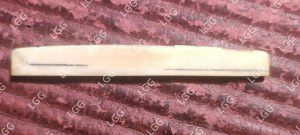
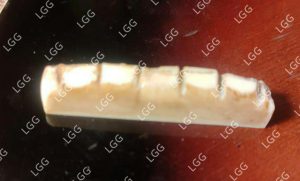
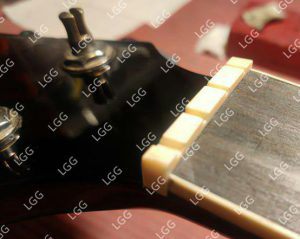
From what I remember of the work I did, I think I changed just the nut on it.
Usually, beyond a certain price range, manufacturers feel inclined to provide at least a bone saddle. The nut they consider of no consequence and so even a piece of plastic shaped like a nut works.
That was the case with this instrument too (if I remember correctly). But the guitar had been brought in because the owner was experiencing some buzz on the treble strings (e, B, G).
So, I threw out the plastic nut and installed a new bone nut dialled to the right dimensions. I remember that I myself was surprised at the really low action at the first fret. The instrument had been a pleasure to play on. The owner too was thrilled with not only the action but also the change in quality of the sound of the instrument.
The story up till now was just the preamble! All this was to introduce the instrument to you.
Well, it turned up again at my doorstep, recently, with that old problem of buzzing strings! A friend of the owner had brought it in.
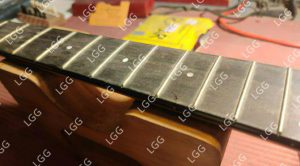
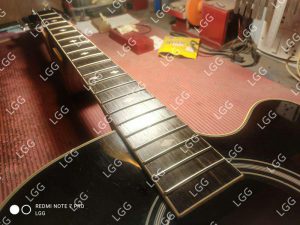
That nice low action had gone lower and the neck of the guitar was straighter than what I like to see.
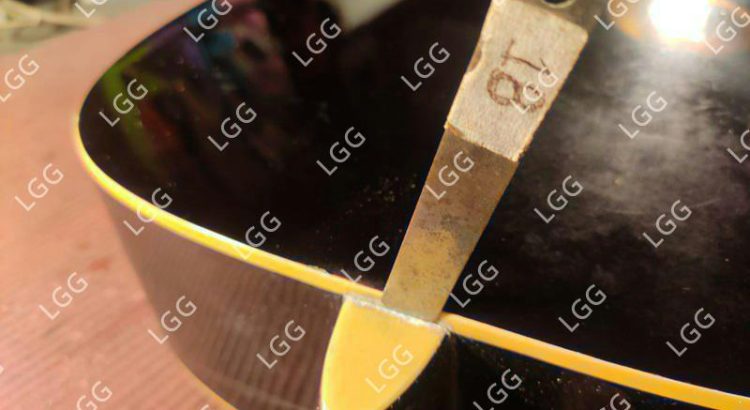
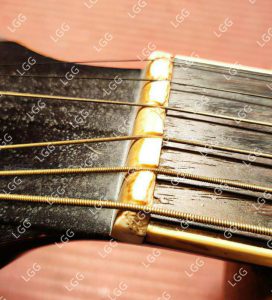
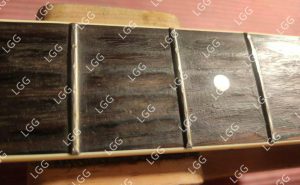
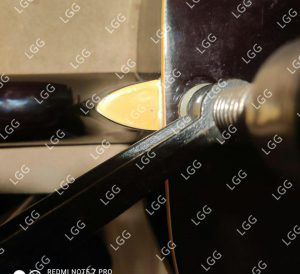
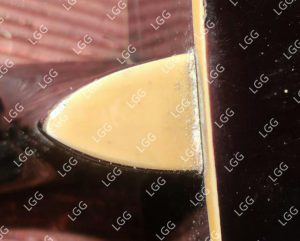
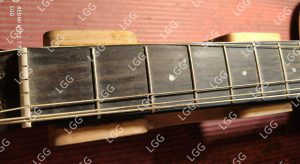
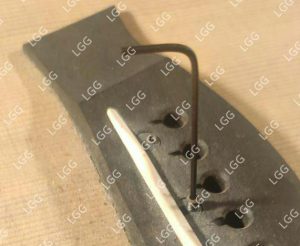
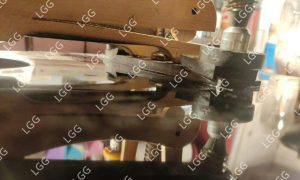
That is a .012″ feeler gauge and it is pushing the string up. As you can probably make out, the string slots too are not too deep.
Sadly, I don’t even have a written record of this instrument. I remember that the action at the nut was low but please don’t expect me to remember what exactly it was. What I can say is that the instrument must have been playing just fine for me to let it go.
The best way I can surmise the phenomenon is that between then and now, humidity dealt its hand and the buzzes came rolling in.
I dialled some relief into it but because the buzz persisted, I filled the nut slots very, very slightly. That all but removed the buzz.
I did not dare go any further working on the nut, neither did I wish to adjust the relief any more.
What made me stop – besides other factors – was that we were working with old, muggy strings. With a fresh set of strings and a fresh set-up, all should be well.
Long time back, I had heard that guitarists often keep two saddles for each of their (acoustic) guitars, which they swap when the action became too low or high due to the rise and ebb of humidity. Though theoretically I understood the concept, practically I couldn’t get my head round it because I had never experienced it.
I own a few acoustic guitars and they are well-made, solid wood instruments which I play on a monthly rotation basis. Now, because they belong to me, they are set up well, are well looked after, and are provided enough protection. Around a month back, I pulled out one guitar, tuned it up and was horrified to find that I could not even play open strings for they were actually sitting on the fretwires!
I scratched my head trying to figure out what could have gone wrong with the neck or with the saddle for the strings to sit on the fretwires, but then realised it would take time figuring out. Instead, I put this guitar back and pulled out another one.
The next one too was suffering from the same malaise. The strings were so low that it seemed someone had taken out this guitar’s saddle and had put in another guitar’s saddle.
Saddled (pun intended) with two guitars that refused to play, I got down to working on them. Both necks were absolutely straight while both saddles were too low. I took out those saddles and installed new ones.
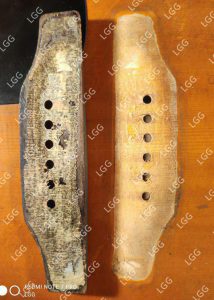
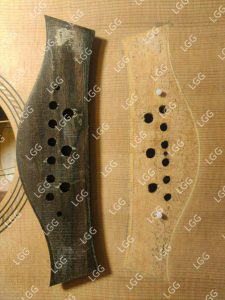
Here is the difference in height between the new and the old saddles.
Remember, both instruments used to play perfectly earlier (with a lower saddle). So, what changed? The more I thought about it, the more I scratched my head. We are going through very, very dry weather. Even as I write this post on Saturday evening, the weather app on my phone shows the relative humidity at 16%!!
We have had days where it climbed to 33% but by and large it has stayed between 15% and 30%. Right! Dry weather. That would mean the wood is (read guitar neck too) losing humidity. Wood drying would mean it is more likely to contract. That would mean the neck would curl upwards. But that would mean the action on the guitar would rise and not fall to make the strings sit on the frewires!!!
More head scratching! Long story short, I don’t have an answer. If you can explain it to me, please do write in.
Anyway, I took out new bone saddles; they are nice and tall ones, and believe it or not, I just needed to remove in the vicinity of .020″ from both of them for the guitars to begin playing perfectly again.
Here are the two guitars sporting the new saddles. The old saddles have gone into the respective cases, to be used as and when the need so arises!
I get daily calls asking me the cost of repairing this and repairing that on an acoustic guitar. Many times I am able to put a figure to it and many times I tell the caller that I would have to take a look at the instrument before giving a figure.
But almost every week I receive a phone call asking me what the repair cost would be for a lifting bridge. Some of the more inquisitive ones even ask me how I propose to tackle it, what glue will I use, etc, etc. I have to explain that not all bridges lift to the same degree, or at the same place. How much and from where the bridge is lifting eventually become price-determining factors. These also determine the course of action to be taken while re-gluing the bridge. I have repeated this answer so many times that now it goes like pushing ‘play’ on a recording machine.
So, this blogpost is actually about how I determine what to do with a particular lifting bridge. The hope is I stop getting those phone calls, though I realise that this blog goes so far and no further.
The following are some of the common scenarios that I encounter and what I do with them. Having said that I feel it correct to also clarify that these methods that I am going to describe, generally work. However, in many cases, I do have to take a different path though the problem is the same.
If, for example, the bridge is slightly lifting (when you can push in the corner of a notebook paper, say, some 1mm and no more) at either or both wings
The bridge as seen from the end block
I like to push glue under the wings, clamp them down, and hope and pray it holds. One could let wings lifting as little as this be, but then the end of the bridge closest to the end block takes the maximum strain from the string tension. Even a centimetre of lift anywhere on this end means that it will certainly weaken the rest of the perimeter.
Another scenario is when the wings are stuck solid but the centre of the bridge is lifting.
As seen from the end block side
In such a situation, I prefer to take off the bridge completely and re-glue it back properly. I said I preferred that route, but I do give two scenarios to the owner.
I try to push glue in and if it sticks, so much the better, and
If it doesn’t stick, we have to take the bridge off completely and you have to pay for both processes.
Then there is another situation where the bridge is lifting right through its extremity closest to the end block
Here, there are no options. The bridge can only be taken off, both surfaces – the top and the underside of the bridge – cleaned of all glue residue, and then the bridge is stuck to the top.
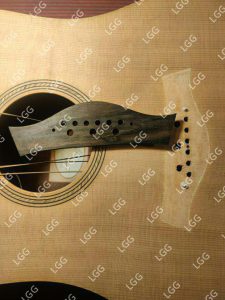
An extreme form of the same situation is the photograph headlining this post. In such a case, the ‘patient’ is rushed into the OR and surgery performed under anaesthesia. Later, the patient comes into ICU, then to the recovery room and then the general ward, before discharge.
These were three common bridge-lift situations, and no matter what I prescribe, follow or preach, the fact is that the correct and the best way is to take the bridge off whenever a part of it starts rising, clean both surfaces, re-glue, clamp, and then give it ample time to cure.
But here is why bridges lift.
9.5 times out of 10 that I have taken the bridge off a guitar, I have seen this. If you can understand it through my drawing, there is a millimetre or two’s worth of margin all round the underside of the bridge and the same margin on the footprint of the bridge on the top too. While on the underside of the bridge this margin defines the extent to which the glue was spread, on its footprint it marks the area that the lacquer intruded on the footprint.
The funny thing is that ‘intrusion’ never seems to look a if it happened by mistake. In fact, it looks as if it was planned to be that way. Why that should be so, is the intriguing part.
The part of the bridge closest to the end block is where there is most stress of the strings. Go back on top and look at that main photograph again. That is exactly what the strings want to do to your bridge. With that margin left on the underside of the bridge, it doesn’t take much for the bridge to start lifting. That phenomenon is compounded by the lacquer intrusion on the bridge footprint.
Are there bridge designs prone to lifting?
Yes! And the following is my understanding of bridges and how they function under string tension.
Of the two bridge designs, which one do you think has a greater propensity of failing?
The string-through bridge without the bridgepins is my culprit. Why? Back to the main photograph and understanding which way the strings are pulling. The string-through bridge only aids in getting itself ripped off (pun intended) due to its sheer design.
The more common bridge with bridgepins lets the bridgeplate take the first onslaught of string action. If your bridgeplate is made of a good hard wood, all is good, otherwise…, read about belly bulges in this blog!
This Yamaha came to me a few months ago in a great deal of distress. In between came a host of instruments with various humidity-related issues which leapfrogged this one.
This too is partly a result of the lack of humidity as you will discover.
A 3/4 guitar, it belonged to a lanky, soft-spoken recording/performing artist. As I inspected the guitar he told me that this guitar had been lying with his brother for two years. The young man was attached to this instrument and wanted it fixed proper.
I don’t think that it was cared for very much during those two years, for this is how it came to me.
While you see the bridge cracked, it was also lifting. While casually looking at it, it might appear that the crack was in a straight line. However, that was not the case. Look closely at the ‘D’ string bridgepin hole. You clearly see how the break is in two lines and not one. And it is a deep break, almost running through the entire thickness of the bridge.
I knew I had to be really gentle with the bridge to be able to take it off in one piece. But then gentle is not the word that comes to mind when you are talking about taking off bridges!
Usually, it is a 10-15 min job. This bridge, however, took almost 30. Why?
Because it was stuck with epoxy! See that shiny underside of the bridge. That’s epoxy!
Whatever, there was a job at hand and it had to be done. So, after 40 mins of scraping and sanding, this is what it looked like
After another 20 mins, it looked like this
A final 25 minutes – 85 minutes in all – later, it looked like this: nice, clean, bare wood!
Once the underside was clean, the crack demanded being tended to.
With not too much clamping pressure, I was able to make the two seams meet, well, almost! That gave me much hope and I went about filling, filing and sanding. Slow and painstaking but fruitful.
This is how it looked once I was through! Not bad, eh?!
Now, there may be some of you who might question the amount of effort and time to put a broken bridge together. Why not put in a new one? Well, I could if I had the exact same bridge. I did not. And I was sure I would not have been able to find exactly the same one no matter how hard I searched. Besides, when you put on a new bridge on an old guitar, you better be sure that the new one is slightly larger than what the old one was, otherwise it leaves a very unsightly margin of bare wood showing all around.
With what I thought was the major part of the work done, I turned my attention to the guitar itself.
The footprint of the guitar on the top needed to be cleaned of all extra lacquer and paint. But this was easier said than done, for no matter how careful you are, there will always be chips, dings and scratches that belie your efforts.
I took the chips and dings with a pinch of salt, deciding to touch up once the bridge was glued on.
Here’s the cleaned bridge area of the guitar with the bridgepin holes and the soundhole covered up in preparation for a cleaning of the fretboard. It was an electro-acoustic instrument.
Now, it was time for major surgery: to glue the bridge to the top. But here I was accosted by a problem.
The body from the outside measured 2.75″ (approximately). Then the braces were .5″ on the back. Take another .5″ for the braces on the top. What all those numbers translated to was that I had 1.75″ of space (approximately), to put my hand in, the clamps in to be able to glue the bridge to the top.
Also, the owner told me how good the electronics were. While clamping, I had to also take care that I did not inadvertently crush the piezo piece stuck to the bridgeplate.
After struggling for what seemed an eternity, I finally to get all the clamps where I wanted them to be. Dry run complete, I applied glue, put on the bridge and clamped it so tight that air would not be able to get in. Thing is, you never get a good bond with just glue. Unless the clamping is just right, either the bond is going to fail soon, or you’re going to break something.
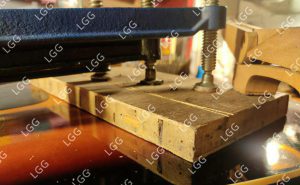
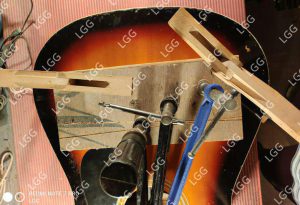
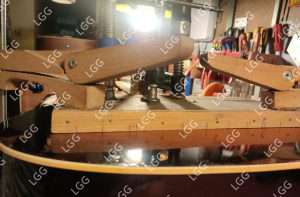
Here’s a look at the bridge under pressure.
After I caught my breath, I began work on a new bone saddle and nut. We could most certainly do better than the plastic nut that the company provided.
The top-most two elements are bone. The owner had purposely chosen an unbleached bone nut to give the instrument an aged look. But before those could be put in the instrument, they would have to be cut to size, and so…calculations!
Those were shaved down and while I waited for the glue to cure under the bridge, I worked on the fretboard which was in dire need of some love. There were a few fretwires that needed divots removed from them and the fretboard certainly use some cleaning and some love potion.
Also, there were minor irritants like the strap button on the heel of the instrument rather than being on its side.
I swear I haven’t seen a longer screw in a guitar. As I pulled it out, I was fearing that the screw was holding the neck and body together.
That hole was plugged and a new hole was drilled for a smaller screw, on the side of the heel.
When the clamps did come off, the bridge looked as good as new. I was happy with my work.
Now, it was time to bring everything together. It came together like a charm. Here’s a look at the finished job!
This is the second of the guitars that came to me where I did not understand the reasoning of the customer. I might add that this was a return customer on whose guitar I had worked a couple of years ago.
For those interested in reading about that experience, here it is:
This time, the customer had ordered online a set of bone saddle and nut and wanted me to install it. He planned to give away the guitar and wanted it to be in top shape. Creditable!
However, when he arrived, the nut seemed fine but the saddle seemed to have been shaped by a novice, for the intonation made for the ‘B’ string was situated where the ‘A’ string would ride! And no! It wasn’t as if a saddle meant for a left-handed guitar had been sent by mistake. Besides, the quality of the bone used in making the saddle was very suspect. No wonder the cost of nuts and saddles is less than half the price I charge!
When I first learned that that major e-tailer was selling nuts and saddles, I decided to check them out. I ordered two sets of nuts and saddles. Call it coincidence, poor workmanship or just my luck (e-tailer’s luck?), both saddles cracked under string tension while I was tuning up the instruments.
I have since preserved the saddle to show customers who think buying from the e-tailer is a great idea. Like I always say, I can only advise and guide. It is your decision completely, and most certainly, your money!
So, with the situation being what it was, the customer decided that he would take a saddle from me and use the nut procured from the e-tailer. The shocker came later. Though the saddle slot was meant to accommodate a 76mm saddle, the owner was sure that a 72mm saddle would work as well. Of course! Your instrument, your decision, your money!
The owner said that he would like a really low action. If you can see it, the line on the new saddle (left) shows how much I have to take off the base to get the action right.
He also did not want me to change the strings. According to him, he had a set at home which he would later change himself. Good enough, but that would mean that I had to work with old strings hanging around, and the danger that in the process of winding and unwinding, there was every chance that a string would break.
While I was checking the guitar, I noticed that the bridge was lifting all around the far side of the bridge.
I showed this to the owner but he decided that the bridge did not require immediate attention. And yes, he understood completely that the raised action on his instrument would be completely solved if the lifting bridge was attended to. And then again, who am I to say anything; your decision, your money.
I got down to working on the instrument and started by taking a look at the neck.
Thankfully, it was dead straight which is how we wish to see it.
Next job to be done? Knocking out the factory-fitted nut.
Usually a tap of the hammer is enough to do the job, but this nut was so well stuck that despite robust raps from the front and from the sides, I failed to dislodge it. Just when I was beginning to think that super glue had been used to hold the nut down, and just when I began swearing, the nut gave way. Maybe the swearing did the trick!
The nut was not super-glued as I had been imagining. In fact, it was seated in a rather deep slot, which was very pleasing to see. A deeper than usual slot for the nut means that the nut is seated perfectly and in perfect contact with the slot walls. What happens then is that sound transfer is much better and loss of sound energy is near negligible.
As I measured the old and the new nuts I realised that the new nut was much longer than the standard nut length! It sat very snug in its slot, such that there was no glue required to hold it in place but it hung out of its slot a couple of millimetres on both sides.
I called the owner and told him about the long nut. He said that he knew about it and it was quite alright if it hangs out a bit. And that is how it went home!
When the owner came to pick up the guitar, I asked him whether he wished to ‘give away’ or ‘sell’ his guitar? He replied that he wished to ‘give’ it to his sister.
Hearing his reply I could have slapped my forehead in exasperation. Though I did not say as much then, but if it was his sister he was wishing to give the guitar to, so that she could learn how to play, why change a perfectly working saddle and nut, and why not fix a bridge that needed fixing?
Even as I write this, I am shaking my head in incomprehension.
My experience with customers, usually, is that facts and logic will appeal to most, if the pocket allows. In my dealings with them, I place the pros and cons of going (or not going) down a certain route and then let them decide the path they wish to take. Mostly, the choices made are correct, or, if not entirely correct, understandable.
In case I feel that the customer is making a wrong choice, I try to explain to him what could go wrong going down that path. But still if he insists, I do as he says.
I saw two guitars in quick succession which left me first amused and then scratching my head. This is the story about the first one.
The instrument was in for a saddle and nut replacement for the owner of the Westwood had tried to correct the intonation on his guitar by filing the intonated sections on the saddle close to nothing.
Wonder if you can see it, but the area where the B sting is supposed to ride has been filed all the way back. Once things got out of hand, the SOS call came to me. I could do little with the old saddle and had to replace it.
As I began taking off the strings, I noticed this
I showed it to him and he showed no surprise seeing it. He didn’t want me to do anything about it because he felt that it would not affect his playing.
I tried explaining to him that tending to a split bridge was as important as swapping the filed down saddle with a new one, but he would have nothing of it. So, I let it be.
While replacing the saddle, I tried to explain that it would be a good idea to replace the nut too, but he wasn’t too enthused. Instead, he asked me to correct the action at the 1st fret with the old nut.
As I took off the nut, I saw why I had been finding it odd all along. Although the nut wasn’t of bone, it had been very oddly cut.
The nut slot on the headstock was worse. Not very clear here but it had a thick coat of dried glue. I tried removing as much as I could safely remove.
In fact the rubbish that you see in the background of the nut photographs is the dried glue removed from the slot.
As I began work on his guitar, he said he would get his own strings and went out to get a set.
Some time later, he called to ask me to retain the old strings. By that time I had taken off the strings and dumped them, and after the call, I had to fish them out of the dustbin. To be fair, he had on a fairly new set with just the ‘G’ string missing. It had snapped, I was told. He brought me a spare ‘G’ string and I got to work.
And as we all know, winding and unwinding strings is the perfect recipe for a string break. And so, the ‘D’ string broke on me as I was trying to tune it up.
I rummaged through my pile of spares and found a D string of the right thickness and replaced it.
There was a slight buzz on the open D string, which disappeared once the string was fretted. I let it be attributing it if not to the cobbled together strings, then to the nut slot geography.
A new fresh set of strings would certainly solve the issue.
But why let a split bridge remain split? I just hope he doesn’t call me in six months saying the bridge has completely split into two!!
For some time now, I have made my bias towards UK-based Tanglewood guitars apparent to you, readers.
After a long time, I noticed guitars that used good materials, had good construction quality, sounded good, and the overall appeal of the instrument was good. Of course, you get all of these in high-end guitars too, but then Tanglewood is far from high-end, and that is what appeals to me: it’s price point.
So, I was particularly intrigued, even distressed, when this beautiful all-mahogany guitar with a satin finish came in
The owner – a UG student – told me how he had bought the instrument and was just getting his hands set on the instrument when the pandemic struck and schools and colleges everywhere were shut down. This young man left his new guitar strung to pitch in a hostel room that wasn’t opened for nearly two years!
When the situation improved and schools and colleges were reopened, the young man found his guitar with a lifting bridge, a sunken top, the beautiful wood binding coming loose at most spots, and the headstock joint and the heel joint beginning to come loose.
There was also a soundhole crack staring at you.
And as if this wasn’t enough, the saddle was falling forward. I was a little surprised that staying under string tension for two years, with the saddle straining against the bridge, it hadn’t cracked the bridge.
Oh, I had to do so much that I didn’t know where to start.
I suggested to the owner that we throw out this factory-fitted micarta or whatever saddle and put in a solid bone saddle which will sit upright, correct the intonation, and would be a wonderful for overall sound projection. However, the young man declined and I kind of understood that with a shoestring budget and such a lot of work to be done, costs needed to be cut wherever. Besides, he could get a bone nut and saddle installed at a later date.
I wanted to help the young man and the instrument, so I just glued a piece of an old debit card and filed it to where the saddle sat bolt upright in its slot without having to be pushed into it.
Next, I decided to tackle the toughest job, the binding coming loose in places, almost all around the top. Oh, there was a lot of heat and glue and clamping involved and some double and some triple tries before everything finally came together.
Similarly, the neck heel had to be tackled: a job done best under string tension.
I must apologise for the crappy photograph: the flash makes the joint unclear. But do take my word for it, the heel came together rather nicely on each side.
While turning my attention to the headstock joint opening, I noticed that there was little to no difference in the opening of the crack with and without string tension. The seam had opened so minimally that though you could more than feel a lip, even with string tension, there was no way of getting glue in and clamping it shut.
I suggested to the owner that if in the future, it opens up some, we will tackle it then.
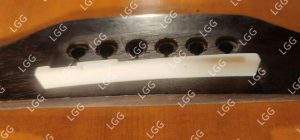
As far as the soundhole crack was concerned, the owner was not convinced that it was in emergent need of attention. Again, though I did not quite agree with him, I kind of understood his reason.
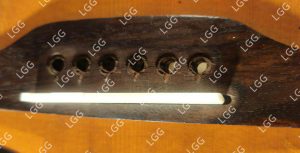
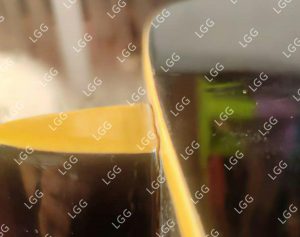
The bridge which was lifting was glued back in place and it was a happy sight to see some of it ooze out.
A 48-hour resting period and all would be well. After the clamps came off, there was a certain roughness to the bridge which I found irritating. I decided to take five grits of sandpaper to it and make it as smooth as a baby’s bottom.
I got it that smooth but then I lost all the colour that the bridge had been dyed with!
And thus, began preparations to dye it back.
Once that was through, I cleaned up the fretboard, gave it a coat of the love potion, and some to the bridge too. Considering how dry the instrument was, I decided to put on the potion but never took it off as is the practice. I knew from experience that the wood would soak up the fluid very quickly. This is how it looked after I was done stringing it.
I also gave the body an almighty rub with warm water and then a light coat of the potion to do its magic. The sheen on the instrument would warm the cockles of the heart of any guitar lover. Me? I was thrilled!
And to get the ‘big picture’
Very purty!
I sent home the owner happy, but with the advice that at least for four weeks he had to make the guitar drink water. He had to make it drink water till the water in the container stopped giving up water. I asked him to come back in a couple of months for a re-evaluation.
Till then…!
And yet…who am I to say that this was the last humidity-hit guitar??!! Maybe, there are more in line!
This instrument has come to me off and on for something so minor and insignificant that I never charged the ‘customer’, nor did I ever feel compelled to document the work done on it. Those visits could also be that the owner of this guitar was trying to ‘suss me out’, for we had long conversations regarding guitar upkeep, this and that. And I understand that sentiment completely. You don’t just hand over your Epiphone Dove Pro to anybody!
This time when it came in, the owner was plagued by a buzz around the 8th-9th fret area, on almost all the strings. Again, I smiled compulsively and knowingly.
This is from a few evenings ago. If the relative humidity is down to 18%, it is bound to play havoc with all acoustic instruments.
The owner had also brought in the instrument because he wished to have the plastic nut on it
swapped with a bone nut. I remember pointing it out to him in our previous conversations.
I showed him a set of bone bridgepins and he chose these
to go on his instrument. (Not a very good photograph, but it is a abalone dot with a gold circle around it).
There were other issues too. The ‘B’ string had chewed up fretwires 1 to 6 in its path (the usual culprit).
Along with these, there were itty-bitty things like a dried fretboard and bridge and taking a look at the hardware on the headstock.
With the owner still around, I played with the truss rod some and when I was satisfied, handed over the instrument to him. Though he loved the change, I cautioned him not to look for perfection in the coming two months, and to just bide his time.
After two months, the humidity will start rising and reach such levels that it gets oppressive. That’s when acoustic instruments will demand another change. That’s the fun of living in North India! Right now, it is hot and dry, then it will be hot and wet, then it will be wet and cool, then cool and dry, then cold and dry and lastly cold and wet! Ladies and gentlemen, you have to play with those truss rods!
Back to the Dove, I dumped the strings and went to work on the fretwires
That’s after levelling and crowing the first six fretwires and going through six grits of sandpaper on each one of them. You may still be able to see a little dimple along the fretwires where the ‘B’ string had dug in, but that’s harmless, and taking that out would have meant doing all the fretwires. Not required right now.
That done, a coat of the love potion was mandatory on the fretboard and the bridge.
Then I turned my attention to the headstock and snugged up the hardware there. The buttons of the tuning machines were a tad too tight, or so I thought. So, I loosened them up a little, till they turned just fine.
Next, major work: bridgepins. I tired fitting the pins in their holes but they would not fit, so I had to ream them. But it seems I forgot to capture that on camera (so like me)!
Once they fit perfectly, I began installing the new nut. The nut was shaved down to the right height and then each slot was worked upon so that each string had the near perfect action at the first fret.
The owner had chosen these (after a little prodding) to go on his guitar. I had argued that he being a performing artiste, would love the bigger bang 13s delivered for his buck.
Here’s how these came together
After everything was done, I was buffing out the body, when I noticed these scratches where the playing arm elbow would normally rest.
Wonder if you can see it…it’s just after the reflection of the light bulb. Anyway, I didn’t do anything with it and decided that I would ask the owner and then buff out those marks.
Maybe next time!
But remember this was a humidity patient? Well, this wasn’t the last.
As promised, here is another instalment of repairs undertaken on another acoustic guitar plagued by the vagaries of the North Indian Spring.
This was a return customer, one whom I remember as owning the best kept guitar. And if you’re looking uncomprehendingly at the tuning machines, I swapped the not-so-good, factory-fitted ones, for these handsome 1:21 ratio machines. For those of you interested, here is the work done on it, on its previous visit.
This time though the owner came in with the complaint of an “irritating buzz that refuses to go away.” I merely smiled (and he must have thought senility was catching up with me) for I was expecting it.
On his earlier visit, I had told the owner about bone bridgepins. This time, he had come also to get a set of those installed.
He also wanted the plastic end pin on his guitar replaced with a twin of the chrome strap button I had put in on his previous visit.
Yeah! That is how clean the man keeps his guitar. That is a reflection of my tuner you are seeing on the surface of the guitar!
But before we got to that, the issue at hand – the God Almighty buzz – had to be resolved. The buzz, as he pointed out, was across the board, beyond the 8th/9th fret. I looked at the fretboard and under string tension, it seemed a little too straight for my liking. I loosened the truss rod, tuned up the guitar but when I played it, the buzz was still there.
I hadn’t expected that and I must have unconsciously frowned, for the owner told me, rather apologetically, that the last time I had told him that there were a few high fretwires that needed to be tackled. Hearing that, I immediately caught hold of the fret rocker and went up and down the fretboard.
Wherever you see a reddish fretwire, that area on it was raised. Seeing so many raised fretwires, I began wondering about the money that the owner would have to shell out, if I went about levelling, re-crowning and polishing them.
What I decided to do was to try and tap the fretwires a bit and see if they got seated. However, I did explain to the owner that this action could be a permanent fix and it could be a temporary fix – the fretwires may rise again after some time.
But thankfully, after I tapped the truant fretwires, they stayed in their slots and the customer was happy with the way his instrument was playing.
After the owner left the instrument with me, I began work on it and decided to work on the end pin. As I pulled out the pin, I realised that there was a hole there that would first need to be filled before one could install a strap button there! No can’t do!
I intimated the problem to the owner and he understood, and I let the end pin remain, after all.
Before I began fitting the bone bridgepins, I decided to check on the tuning machines on the headstock. But all was snug and tight there.
Now for the bridgepins. I tried putting in the bone ones, but they would go in only a little more than half-way. I had to ream the bridgepin holes.
This is a slow process and you have to go slower. Half a turn more of the reamer and the bridgepin would be flopping around in the hole, half a turn less and you would have made no difference to the fit. Ream a little, check. Ream again, check again!
But the reamer made quite a mess of the rosewood dust. It was time to string ‘Irene’ up. The owner had brought these along and so these went on.
‘Irene’ played like a dream, and I thought there was just that wee bit of sustain more to her with these around.
This one went home cured, but I promise you, more are coming…!
We, in North India, see extremes of temperature as well as that of relative humidity. While it may be a good thing to be able to experience every change of climate and weather, acoustic guitars are certainly not thrilled with the idea.
This period – say from February 2nd week to May end – is an exceptionally dry spell. Those who follow weather conditions, know that the relative humidity during this period dips to as low as 20%. Notice how quickly your clothes on the line dry out? Notice how frequently you feel thirsty? That’s the relative humidity acting.
This was yesterday evening!
Acoustic guitars too feel the pinch and show it in the form of guitar buzz. One evening your guitar will play just fine and the next evening there will be an irritating buzz.
To tackle the issue, there are two things that must be done compulsorily. You need to let your guitar have a drink of water and you need to adjust your truss rod incrementally. Now, most people are mortally afraid of touching their truss rods and they take the instrument to the closest instrument repair shop.
This one came in a few days ago.
The neck was straighter than what I would like to see, and so,
Wish I had taken a photograph of the neck before adjustment, but here is one of it after the ‘operation’.
The action after the adjustment was a liveable .085″ on the ‘E’ and just short of .080″ on ‘e’.
I bid adieu to the owner with the advice to let the guitar have a drink of water.
It was a pretty guitar though, the gold/brass bridgepins offset against the coffee burst was eye-catching.
This was the first guitar to visit the Lucknow Guitar Garage with this ‘seasonal’ problem. I am sure there are many more coming soon!
Though being something very practical and even prosaic, involving lots of measurements and mathematics, I see guitar repair more as a healing that I provide to the instrument and to the owner. That somewhere in the process, I, too, am healed, is also true.
In the one-and-a-half decades that I have been repairing guitars, there’s a generalisation that has got rooted in me. People who hand over their instruments to friends/cousins to be brought to me for repair, are actually not too attached to their instrument, and thus, are not serious musicians. Having said that, of course, there are exceptions to the rule.
When a family member falls sick, YOU take him/her to the doctor. You don’t ask your friend or cousin to do it. Why? Because your concern makes you want to find out what is happening with your loved one and what can be done to get him/her normal.
Your guitar (or any other instrument) is like that family member whom you are concerned about, or, at least it ought to be. Instead, you deputise your friend! I will still try and do whatever I can to set things right with the instrument, but…you should have been there!
One such instrument was recently ‘brought’ to me.
More than the problem, it was the condition of the instrument which was off-putting.
The problem with it was that the bridge had lifted off it.
LIFTING BRIDGES
Let me say something in black and white: 95% of the bridges don’t lift before pulling a little belly into the instrument!
As the strings strain against the bridge, in their effort to pull it off the top of the guitar, the glue bond resists it. If the bridgeplate
is made of a good, hard wood (as in the case above), the bellying will be to a lesser degree, but it will still be there. In the unfortunate instance of an inferior wood or inadequately sized bridgeplate having been used, the belly will be much bigger, and take that much more effort to straighten out (if at all).
Only after they have forced a belly into the instrument, do bridges finally start to lift, even if it is just the corners of the wings. So, as soon as you can make out that the bridge on your acoustic guitar is lifting, loosen the strings and take your guitar to someone whom you can trust.
Lesson over!
The first thing was of course to take off the strings. In the process, as I tried taking out ‘G’ bridgepin, it broke right at the neck – a telltale sign that the guitar was very dry.
You remember from the photograph posted earlier that the bridge looked as if it was ready to pop off the bridge anytime. Unfortunately that wasn’t the case. No matter how hard I tried, the bridge would not budge.
Yeah! I had to clean (sanitise) the guitar before I worked on it!
The more heat I gave it and tried to prise under the bridge, the more it popped and crackled but refused to come off. Pop and crackle…hmmm…it was my old nightmare, super glue, visiting me again.
The persistence finally paid off and the bridge did come off, but like this
Do you see the handsome 2-3 mm area inside the footprint of the bridge, all around? I have never understood manufacturers, why they leave that area of paint under the bridge.
This is area here is critical to providing strength to the bridge-top bond, for it is here that the force of the strings pulling, acts. With that pressure point weak, there is little hope for the bridge to stay on, endangering your instrument’s overall health too.
Anyway, I began cleaning the bridge and
the super glue on it came off only bit by bit and as a white shavings. What a royal mess it made!
However, there was something odd about the bridge itself. It didn’t seem right to feel, even though it had seemed okay. But as I looked closer
Do you see it? The bridge had curled due to the bellying and under the strain of strings tuned to pitch. I called up the owner’s go-between and told him that straightening the bridge and the belly would cost extra. Mr Go-Between said ‘let me talk to my man’ and I said, ‘Right’!
Meanwhile, I continued my work. I pulled out my marble slab, glued on sandpaper to it
and had a go trying to straighten the bridge out. I marked an area along its outline to check whether I was getting anywhere with the sanding and began sanding it. Much dust but little luck!
Just then Mr Go-Between called to say that the price was too much for His Man. He said don’t go any further and that he would come and collect the guitar from me!
Surprised as I was, I dropped everything and dusted my hands off. I had to wait a month before Mr Go-Between came and collected the now-bridge-less guitar and its sundry parts!!
I charged nothing for my labour, in fact, I even replaced the broken bridgepin.
For the Unseen Owner and for others a reminder in lighter vein
This is the second in the series of super glue/epoxy-stuck bridges.
The famed moustache bridge does sit very easy on the eyes but if it is stuck with super glue and you have to take it off, oh…heaven be with you!
Usually while taking off bridges, one has to be really careful to use the right amount of force while getting under it with knives. In this case, because the bridge itself was so delicate, I had to also take care that I didn’t break it, while taking it off.
Preparations complete, I heated the bridge area and tried prying with the smallest knife in my armoury. It got in and as I moved to larger knives, I began to hear that unmistakable pop and crackle that one hears when super glue is protesting the invasion of your knife.
I actually stopped for a second to mutter, “Bloody Hell”!
Anyway, after some time prying, prodding and prising, the bridge did come off without too much effort.
The encircled areas show you where the super glue did not come in contact with anything and dried up in pristine form. One look at the footprint of the bridge on the top and I could see why the super glue had not held on. No one had bothered to clean the footprint before sticking on the bridge. I let out a heavy sigh…there was much, much, much work to be done!
Realising that, I jumped right in. The first thing I did was to fill the holes in the top which had been created to accommodate the little pegs glued on to the underside of the bridge. What help flat chips of wood were, sitting in perfectly circular holes, is anybody’s guess.
Can you see that little sliver of wood standing up on the rosewood bridge? The top of the guitar was solid spruce so I plugged it with some solid spruce dowels.
This needed to be done first so that I could flush cut the dowels. After I picked the paint off the footprint area, all that I would need to do was to take some rough sandpaper to the stubs of the dowels.
Strangely, perfectly circular dowels had been embedded in the bridge to help seat it in the top and not let the bridge slip around. But it seemed as if the round stubs had been whittled down to mere flat sticks. Why? Dunno!
Anyway those pieces in the wood were promptly shaved off for there was little use for them.
Can you see the round different colour wood where the dowels were seated into the bridge? And that’s also the view of the super glue mess and the little corner of the bridge that I was able to clean. That little corner had taken me something close to 25 minutes. I am able to clean wood glue off a whole bridge in less than 20!
An hour and 15 minutes later, I finally breathed. The bridge was finally clean.
As I looked at the footprint of the bridge on the guitar, I knew fun times were just beginning.
That is another 40 minutes of labour. The curves and bends in the design reduced speed and force while the clean, stark perimeter of footprints that I am used to seeing was sadly missing. It looked as if a child had tried its hand at taking off the paint!
A good two hours later I managed to take the paint off the entire footprint, leaving jagged edges all around. Trying to chip in straight lines and chipping around a bend are two very different things – I very sadly noticed.
But now that both surfaces were absolutely clean and the relative humidity was just right for a glue up job
I got around to it. Generous amounts of glue were spread out on the now-clean footprint of the bridge and the bridge was dropped in place. I pressed down on the bridge as hard as I could and cleaned off the first wave of squeeze out.
Then came the clamping and more squeeze out and then the tedious cleaning.
Do count the number of clamps used to tackle what I saw as pressure points.
Then I just walked out and never came back to the workshop for two days. When I did, it was because it was time to take the clamps off.
But before anything else, a touch-up job was required to fill in paint where it was missing around the periphery of the bridge. I did that with the smallest paint brush I could find.
Now, I had to re-drill the holes (glue gets in everywhere and blocks all the holes), give the bridge a nice coat of ‘love’, and then to string her up.
Yes! This one has jumped ahead of a few instruments because I noticed a disconcerting trend in guitar construction that needed highlighting.
It is most certainly a trend here in India, but readers of this blog the world over need to chime in and either confirm or deny whether they have noticed it in their country/region, or not. However, comment only if you have SEEN the trend. Commenting on the basis of traditional knowledge (how it was done in the past) would mean little.
The recent trend that I notice in India: Acoustic guitar manufacturers have resorted to super glue to stick the bridge to the top! The guitar that I am going to talk about in this post is the 7th instrument in 60 – 75 days that I have seen with super glue being used for bridge attachment to the top. The first four instruments I brushed away as mere coincidence, but a couple more and I was forced to take note of it.
Why is it used? It is cheap, it is quick, it is less messy…almost everything is in its favour!
So, what is so wrong about it? Super glue is great for furniture like a sofa, which just has to sit (or stand) in one place. However, the strength of super glue is its weakness too. So strong is the super glue bond that it is brittle.
Think of an acoustic guitar which has a bridge glued on with super glue. Imagine this instrument sitting tuned through summer and winter to spring and summer of this year. If you don’t get a warped neck, you will certainly have the bridge popping off. And even if the bridge doesn’t exactly pop off, it will start lifting.
Once that happens, believe me, it won’t be a pretty sight. For a dynamic instrument like any acoustic, string instrument, ONLY WOOD GLUE does the trick.
Why? Because when it comes time to remove a glue joint, all you need to do is apply some heat, a bit of moisture (steam provides both), and a bit of elbow grease, and…viola! Whatever you need removed can easily be removed. For example, the lifting bridge on that instrument that has been standing for a full weather cycle, if it had been wood glue, would have come off easily, without damaging the top.
A super-glued bridge is bound to rip off lots of wood from the top when it comes off. Cleaning a taken-off bridge that has been glued with regular wood glue, is a 10-minute job. With super glue, you may easily multiply that value 10 times, maybe even 20 times! Believe me. Remember this is the 7th guitar of the type that I was working on!
Right! So, this came in
If you can’t read the logo on the headstock, it reads ‘Hofner’. Read all about Hobner, Hovner, Hofner, here
Now that you know about the company, maybe you’ll respect the instrument a little more if I told you it carried a factory-fitted bone saddle. The nut had got misplaced so I needed to put in a new bone nut.
As bad as the headstock break was, the bridge was lifting too
The first job was to get the head and the body together again, as was meant to be
Different angles of the same shot!
And while that joint cured, I turned my attention to taking off the bridge.
And anytime you heat a bridge and try getting under it, and it starts to crackle and pop (like popcorn), those are the first signs that you are taking off a bridge stuck with super glue! This one crackled and popped too!
The very dark spots is where the adhesive collected and dried without attaching to anything. Knowing that my work was cut out, I began scraping.
Take a better look at it. The white powdery stuff getting scraped off the bridge is dried super glue. At best dried wood glue will come off as a transparent-yellowish film, and it does not shine in the light.
25 minutes and it hasn’t come off.
Another 25. Has it come off? Nope!
Another 20 minutes later! And the mess it created…
And that was one surface clean. What about the other surface (the top)?
What you see inside the margin is partly finish and partly super glue. This took me another 35 minutes to clean. Once that was done, all large pieces of wood dislodged in the process of taking the bridge off and cleaning its footprint on the top, were glued back.
Meanwhile clamps came off the headstock and the joint stood. Experience has taught me that the joint will stay together only as long as you don’t put on strings!
In order to ensure that the joint stays exactly the way it is, it was necessary to strengthen it with strategically placed dowels.
This entire operation took me some 25 minutes – almost 1/3 the time I took cleaning just the bridge. What helped me along was the very dry weather.
Structurally, the neck of the instrument was now sound. But aesthetically, it was quite unsightly! So, I mixed up some tint in some wood putty to camouflage the insertions.
And while this dried, I returned my attention to the bridge area. The old clamps came off and the bridge was glued on and clamped well and proper.
And while the glue-up was drying, it was just the right time to take care of the itty-bitty things, like, shaping bridgepins
and getting the strap button in the right place.
Also, the bone saddle seemed to have been raw sawn to size and put in the slot. I buffed it out a bit so that it wasn’t too harsh on the eyes.
When the clamps were pulled off, the bridge looked as if it had never come off
Now, to re-drill the holes (blocked by the wood glue I had used) and to re-thread the piezo element through its hole in the bridge
I fell in love with the piezo element for I have never seen something as slim as this!
A little more love for the fretboard and bridge, and, wow
However, when I strung it up with new strings and the new nut, the action was too high. Shaving down the saddle brought the action down to where I wanted it to be but there was no break angle left. In fact, the ‘e’ string was running straight through!
I got out my files and cut slots from the the bridgepin holes up to the saddle which would change the angle of the string, in turn, increasing sustain and volume.
And here she is…all ready to go home!
P.S.: Do write in and tell me whether you see ‘the trend’ in your part of the world – wherever you may be.
Ever since I repaired a guitar and removed a ding in its top – one which the owner had fond memories of – I have made it a point to only do as much as I am asked to. Yes, I point out problem areas during the initial inspection and whatever else I notice while working on the instrument, but to do or not do I leave to the owner to tell me.
While pointing out the problems, I also tell them how the unresolved issue is going to affect their playing/instrument’s health. And after that it’s the call of the owners to use their wisdom and decide whether they wish to get the problem rectified or not. After all, it is their instrument and their money!
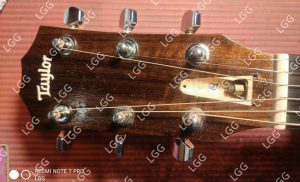
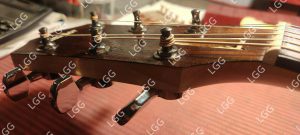
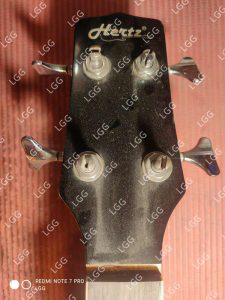
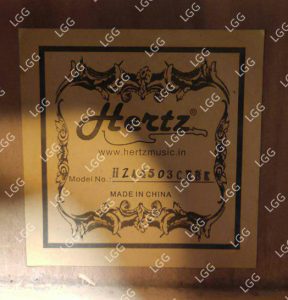
There was this Hertz that I tended to recently.
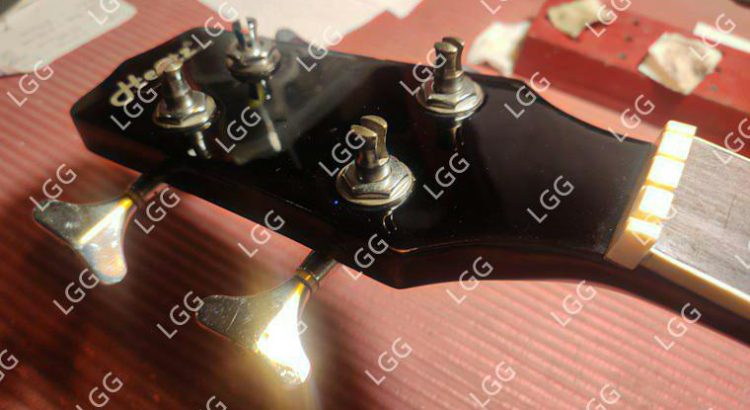
There was a hell of a lot wrong with the guitar. For starters, it had a crunched (plastic) saddle and a broken (plastic) nut. If you can’t see it, the portion of the nut after the ‘e’ string has got knocked off.
And if you can make out, the saddle is curved as it sits in the slot. It wasn’t the fault of the saddle but the slot itself was curved.
There was quite a handsome belly behind the bridge area
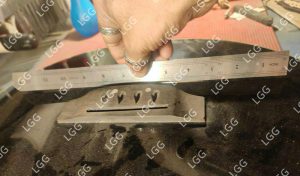
The bridge itself was lifting from its extremities: the markings on the paper show how deep the paper went in
The bridge was cracked through
The fretboard (and the bridge) was dryer than tinder
All the strings on the treble side had been wound from the outside (and not inside). Go back up and take a look at the third photograph (the one showing the broken nut). See if you can see the strings wound from the outside.
And though the owner had pulled out the instrument out of a soft case in front of me, the guitar was as dirty and as grimy as an instrument left out in the open for a couple of years.
The owner’s explanation was the same as I have been hearing for a few months: instrument in one city, owner in another, lockdown, two years…And after I had pointed out the problems, the owner chose to get just the crack in the bridge repaired. He did not wish to have the the bridge glued down, nor did he want the belly tackled.
Who am I to argue?
I knocked out the nut and as I pulled on the saddle, it refused to budge. I had to pull it out with a pair of pliers
Can you see the curl in the saddle now?
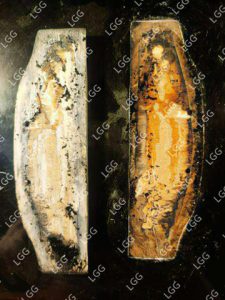
Anyway, since both the nut and the saddle had to be replaced, I put in a bone set.
Then I set about filling the crack and sanding the fill flush.
Cracks in the bridge appear primarily when the bridgepin holes are not wide enough for the pins and the strings. So, after repairing the bridge, I took a reamer to the holes and worked it just a wee bit.
Once the saddle had been cut down to size, something needed to be done to stop it from being pulled forward due to the curve in the slot. A portion of an old plastic card was most useful.
Now that the instrument was ready to be strung up, I took some warm water and gave it a bath (probably the first of its lifetime). I got the muck off it, polished up the body, cleaned the headstock, cleaned and snugged-up the hardware on it and cleaned the fretboard, oiled it (and the bridge).
Here’s a final look at the bone nut and saddle under string tension
After it was finished, I just wondered what and how the owner would play with that high action due to the lifting bridge and the belly bulge. I felt as if the owner’s money and my effort had been put to waste. If the owner was so attached to it, he could have just cleaned up the guitar and hung it on a wall. Why get one-third of the problem sorted with two-thirds of it left to plague the guitar?
I just hope nine-10 months down the line the guitar doesn’t return to me with the bridge ripped out of the top, where I have to repair the top for damages caused by the bolts holding the bridge to the top!!
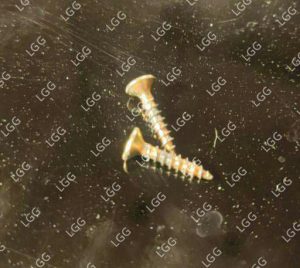
Those white, pearly dots next to the bridgepins hide bolts and if seen from inside, one would be able to see the nuts holding them too.
Now, the fun part! I called up the owner a day after he gave me the guitar, asking him to come collect his instrument and he landed up exactly a month and two days later!! Oh, he was unwell, he was out of town, he had asked his cousin to pick it up…
FAIR WARNING!
Because of this experience, I am forced to inform prospective customers that henceforth, Lucknow Guitar Garage will accept instruments for repair only on full advance payment of the expected cost of repairs. This, of course, will be an estimated cost. Whatever the difference is – either way – will be taken care of at the time of delivery.
Also, I have only a small space and cannot store instruments for months on end. If customers are unable to collect instruments till three days after the date of delivery, a charge of Rs 100 per day will have to be paid, at the time of delivery, fourth day forward.
Look carefully at the photograph above and check out the humidity levels. If you own a solid-wood instrument, are situated in North India, and the humidity is below 45%, this post concerns you and this post should concern you. In this scenario if you’ve left your solid-wood instrument tuned to pitch and standing in a corner of your house, you should be very worried!
A refresher course
What is a solid-wood instrument? One that has the top made out of a single wood, and the back and sides also of a single wood, eg, spruce/cedar for the top and mahogany/rosewood/walnut for the back and sides. Thus, they are also referred to as single-wood instruments. ‘All-mahogany’ and ‘All-koa’ wood instruments (having top, back and sides of mahogany or koa wood), also fall in the solid-wood-instrument category.
How do you know if it is a solid-wood instrument? Carefully note the ‘design’ of the grain of the wood on the top or back, or sides. Now try and spot the exactly the same pattern at exactly the same place on the inside. If you find it, hurray!
What is the ‘other’ kind of instruments? Ones that have a thin veneer of spruce or mahogany but under that, the bulk of the wood is some ordinary wood. Or, an instrument that is made up of several thin layers of different woods. Thus, the ‘other’ instruments are also called laminate-wood instruments.
What is the difference between the two? Price and sound quality! A laminate-wood instrument will always be cheaper than a solid-wood instrument. Understand the issue like this: a leather jacket which has only two pieces for the back and the front, and single pieces for the sleeves, will always cost more than a leather jacket made up of leather patches.
A solid-wood instrument produces a much ‘purer’ sound than a laminate-wood instrument. Revisit the school physics class where the teacher was talking about refraction of light. Remember how that ray of light passed straight through a homogeneous material, retaining its intensity, and how the same ray of light came out crooked passing through a heterogeneous material, with lower intensity? Much of the same happens to sound waves as they traverse through single-wood (homogeneous) instruments and laminate-wood (heterogeneous) instruments.
A solid-wood instrument, despite its advantages and price, is a delicate instrument, akin to a pure-bred pet that demands a lot of attention, care and maintenance. The laminate-wood instrument is like a mix-breed pet, not given easily to diseases and ailments that normally afflict pedigreed pets.
The solid-wood instrument, due to the nature of the wood used, is also given to dramatic effects of nature: too much humidity, too little humidity, high temperature fluctuations, etc. Laminate-wood instruments, due to the nature of the wood used, are not given to these effects.
So, if the solid-wood guitar is so much hassle, why buy it? For the sound of it, baby, the sound! Play a solid-wood instrument and you will never be able to play a laminate-wood instrument again.
Course ends!
Right! So, the humidity in the atmosphere is less than optimum for your (solid-wood) guitar. And you’re certainly in trouble if you have left your guitar tuned to pitch and not played for even 3 – 4 weeks.
Here’s why. Wood is an organic material and reacts to changes in weather conditions. Reduced humidity in the atmosphere sucks the moisture that is present in the wood. Add to that the force being applied by the strings. In a laminated guitar, because different woods have been used, those woods lose moisture at different rates, making the instrument much sturdier. A solid-wood instrument succumbs all too easily.
It often starts off with a fret buzz. The loss of moisture from the neck pushes into a back bow, pulling the strings closer to the fretwires.
Don’t be surprised if you see the centre seam separating on either the back, or the top, or, both! The wood loses moisture and the glue eventually gives up holding the two halves of the back or the top, or both together: much like this one
In some (solid wood) guitars, loss of moisture from the wood also causes the area of the top behind the bridge to sink – the opposite effect of the belly bulge. While the belly bulge may partly be caused due to over-humidification, the belly sinking is a sure sign of a dried up instrument.
Pic courtesy fretnot.com
Equally dramatic is the effect on bridges. Look at the bridge pin holes – six perfect breaks in the grain of the wood – a huge incentive for the bridge to crack, stuffed as it is with strings and bridge pins. Add to it the loss of moisture and you have the perfect recipe for a bridge-split. Just like this one
Often, a thin but obvious crack, running under the fretwires, through some length of the fretboard is a sure sign that the guitar is dry and dehydrated. Correcting this is some job indeed. Fretwires through the length of the crack need to be pulled out, the crack needs to be filled and then the area sanded level. Then the frets have to be reinstalled and (many times need to be) levelled, crowned and polished.
Pic courtesy strangeguitarworks.com
When the dehydration is to a lesser degree, one sees a phenomenon called fretwire sprout. The wood shrinks having lost (some of) its moisture content. However, the fretwires are metallic and remain their original length, giving the impression of having ‘outgrown’ the fretboard.
Pic courtesy guitarniche.com
The Remedy
KEEP TRACK OF THE HUMIDITY! As soon as humidity levels fall below 45%, know that your guitar is thirsty. Give it that life-saving drink of water.
While there are umpteen contraptions available in the market to humidify your guitar, remember, the idea is to put the water back into the guitar that it lost. A small plastic vessel containing water stood in the guitar will also do the trick, as long as it does not tip over.
Keep the water in the guitar for a few days and repeat the process the following week and the one after that till the outside humidity levels return to being above 55%. Of course, if you put the water vessel and forget about it for a few weeks, that also works. However, for people who must play the instrument every few days, the first method works well.
Whichever method you choose to follow, by doing it, you ensure that your guitar has all the moisture it needs. By following it religiously, you will ensure that you don’t have to encounter all the problems described above, when the humidity dives. If the damage is small, rest assured that enough humidity will return it close to normal.
For the rest of the procedure, I remain at your service!!!
This was the first instrument of its kind that I had the opportunity to work upon – well, not actually work, but assess and recommend changes, if any.
It qualifies to be the first instrument in its category because this is a previously loved instrument and the new owner decided to run it by me. It is always a good idea. And it was a Baby Taylor, in fact, the largest of the Babys!
And like all Taylors, it had a bolt-on neck
Structurally, it seemed to be healthy: the neck joint was nice and tight, no other joints opening, no braces rattling inside, no tuning machines ready to fall off…but there was this
The treble side of the bridge was lifting, just that much.
However, the frets and the fretwires were a bit crusty and the fretboard seemed a bit dry. What made me raise both eyebrows though was that it had those artificial plastic (micarta or something) nut and saddle in place.
So, I went about my job, snug up the hardware on the headstock and adjusted the truss rod to take out a wee-bit of extra relief from the neck.
cleaned up the fretboard, the fretwires and gave some love to the fretboard and the bridge
Then there were slight abrasions like this one
which were duly banished
All that was left to do was to string ‘er up, but before I did that, I worked on the bridgepins and gave their ends a little angle so that string ball-ends would not catch on the ends of the pins
Then I strung up the guitar with these, for the owner chose them
I told the owner to take the instrument back, play it to his heart’s content and look for things that he would like changed. After six months, if the bridge had lifted any more, we would have to take it off completely and reglue it. If it hadn’t moved much then we could risk just seating that lifting corner down.
Also, the six months would help familiarise the owner with the instrument. Once, he had got used to its volume and sustain, the change to a bone saddle and nut would surely make him go, ‘Woah!!’
Besides the nut had to go, most certainly, for the slots in it were way too deep.
Here’s the Baby, all cleaned up and ready to go home
A six-month old acoustic instrument is equivalent to a day-old infant in life-span comparisons. If that infant develops a problem, it is very troublesome, and indeed, heart-breaking.
This Yamaha APX600 came to me a while back
with an issue of high action. Learning that it was just six months old (if I remember correctly), and checking the instrument, I was surprised. One doesn’t expect to see this in a 6-month-old instrument.
Today’s learning!
I have said this before but I will say it again for the sake of those who missed it the last time around. All acoustic instruments, irrespective of type, brand, price range, etc, will experience two things as they age: a) the rise of the belly behind the bridge area due to the string tension, and, b) a perceptible increase in action as string tension plays havoc with the neck angle. When you buy an acoustic instrument, buy it with this knowledge that you’re going to face these issues, though the degree to which each instrument experiences that change may vary. There’s just no getting around the issue.
What can be done to delay the onset of these issues? Since string tension seems to be the culprit in both situations, don’t put on any strings!! Simple!! But then without the strings you won’t get very good sound, right?
Jokes aside, use the string gauge prescribed for that instrument.
Prescribed? If you buy a guitar in that Rs-15,000 range, you will probably get an ‘owner’s manual/a brochure’ which will detail materials used in the instrument, how to maintain it, and the string gauge that the manufacturer prescribes for it. Manufacturers are able to do this because they know the size of bracing, type of bridgeplate used, the type of wood used for the top and the neck…
Keeping all those factors in mind, the manufacturer prescribes a string gauge, and many times, what type of player the instrument is suited for.
If you don’t find a brochure along with your new instrument, chances are that if you look up the company on the internet and search for your instrument, all these details would be provided there.
You like 10s, so you put 10s on your guitar: it doesn’t quite work like that! If your instrument is built to handle 12s, and if you put 10s on it, you won’t get the same response from the instrument as you may have heard another player extract from another instrument of exactly the same model. If 10s are prescribed and you go putting 12s on it, you would be playing havoc with the instrument’s anatomy!
Having said that it is also true that you can go up one gauge and come down one gauge without any problem. So, if 12s are prescribed and you put on 13s or 11s, no problemo!
Back to the job at hand, I checked the guitar and it had 11s on (Yamaha prescribes 12s for APX600). Six months old and with the right string gauge, and an instrument which was played all the while, one has only the construction to frown at. Shame on you, Yamaha!
But still the instrument had to be corrected.
There was no extra relief in the neck but still the action was a lot more than desired
So, all that could be done was shave down the saddle.
But to get the desired action, so much saddle would have to be shaved that very little would be protruding outside its slot in the bridge.
I had initially suggested to the owner that we put in a bone saddle and bone nut. Now, after measuring things, I called him up to see if he still wanted to put in bone elements. He answered in the affirmative and I proceeded with the job.
With that low saddle, there would be no break angle for the strings coming over it. So, I decided to cut string slots in the bridge that would run almost to the saddle.
Since the owner wanted to replace the strings with 11s, I used the old strings to dial things in. Here’s the instrument with the old plastic saddle shaved down and the old strings.
Trying to give you two perspectives
Then, the strings were taken off and the bridgepins were stored in the order they came out of their holes (always a good idea).
With the strings off, the fretboard was cleaned and oiled, as was the bridge, and the fretwires were given a nice rub. The body was buffed out with special attention being paid to the headstock and the hardware on it.
Here’s a look at what the bone nut looked like
Believe it or not, there is no glue holding the nut in its slot – so tight is the fit. String tension takes care of the rest!
When all seemed well, a new bone saddle was shaved to almost a third of its size and installed.
The owner’s choice of strings was this
Here’s what this baby looked like, all set to go home.
As far as breaks in tops and backs on acoustic instruments go, there’s little to differentiate between classical guitars, flat top guitars, ukuleles and even violins. Either the seam separates or a trauma causes a fracture.
This tenor ukulele had been sitting tight at home in its soft case till when it was taken out. This is what was seen on its back.
This was one of those fun jobs that do not involve millions of small steps to get one step of the job done. All it needed was some saw dust, some wood glue, sandpaper and a bit of touch-up. But first, how it could have happened. As I look at it, this uke, possibly, suffered an impact, sudden and forceful, exactly at this point. It could also be possible that something very heavy was dropped on it.
However, it was also true that it was pretty instrument – mainly because of the highly figured wood used and it was an all-solid wood construction.
Getting down to work, it was just a matter of filling up the crack with a mixture of saw dust and wood glue and holding everything in place such that a lip did not appear anywhere along the break.
A few grits of sandpaper to smoothen out the ‘scar’, but this is how it looked after the first few grits of sandpaper.
And here are all the grits of sandpaper that were used.
Once I was through with all those, furniture marking pens came in handy to disguise the ‘scar’ both in the dark and the light areas of the wood.
Yes! One can still see the break but it is now solid and the eye is not drawn to it like it earlier was.
Another one of those instruments that is stood up in a corner of a room and forgotten about. It had more dust and dust worms than the Sahara Desert has sand!
Just the thought of the amount of elbow grease I would need to put in to get this thing operational, was making me sweat.
The deal-clincher was when the customer told me that this was the first guitar to more than a couple of people, whose sentiments were attached to it!
I donned my hazmat suit and got working. Cleaning the loose dust off it, I tried to assess the instrument. The headstock read ‘Grason’ and though it did not ring any bells in my head, it was fairly apparent that it was a well-constructed, floating-bridge, f-holes, tail piece – through which the strings would thread, jazz-type guitar: the kind fairly popular in the India of the 80s. I put the instrument’s age down to between the mid to late 80s.
It had a zero fret, and my experience with such instruments has been that they almost always have a nice, low action. It also had a pickup, but it was non-functional. The customer did not care about the pickup and my brief was to try and just get the instrument in playing shape.
And to do anything, I needed to first deep-clean the instrument. So, off came everything on the guitar. Each part was dusted and then cleaned with whatever cleaner worked best for that part.
However, I did take care to mark the bridge position before I took it off. I also marked the treble and bass feet of the bridge, so that I wouldn’t put it the other way around. It was one of those adjustable bridges completely made of wood, with the bits of brass hammered into the wood, acting like a compensated saddle.
There was a very interesting facet of the instrument: the tail piece was solid rosewood! A casual look at it gave the impression that it was a moulded plastic tail piece, but when I took it off
The first thing I turned my attention to was the hardware on the headstock. I cleaned and oiled the tuning machines and all of them worked like a charm.
And then it was the turn of the fretboard
and bringing the fretwires back to life.
The body of the guitar was scrubbed and buffed, and then everything was brought back together as it intially was.
I strung up the guitar with the strings the customer had chosen
Here is how it turned out
I was very pleasantly surprised to find that everything functioned just right, the tuners held tuning, the intonation was very nearly right and the guitar played in tune.
The only sticking point was that the action was higher than was comfortable. With an adjustable floating bridge, this was no problem. I just dialled the height-adjustment screws on the bridge all the way down
and that problem was solved too.
I was pleased to note that the customer was very happy with the results.
Remember, how I say that problems/guitars of a certain kind/make seem to come together? Well, here’s another belly bulge though not quite as dramatic as some of the ones I have recently tackled.
This instrument came in sometime back with all the tell-tale signs that it had been given up on. But it wasn’t half as bad a guitar as some of the ones I have seen.
The complaint was a painfully high action and a crushed saddle. Now, when I hear high action, my reflex is to check if the bridge is lifting or not. When I checked this one, sure enough, the bridge was lifting. And you can see the saddle crushed under the ‘G’ string.
But besides the lifting bridge, there was a healthy belly too (Apologies, I did not take photos of that). So, why wouldn’t the action be high? The order of operations was belly first, bridge later. No sense trying to stick a flat bridge to a curved top. However, to properly tackle the raised area, the bridge needed to come off.
Usually, with a bit of heat and some coaxing, lifting bridges come off without too much fuss. This one fought me tooth and nail. In fact, as I pried with my palette knives, there were a couple of points uder the bridge where the knives seemed to hit a kind of a wall, almost making me believe that the bridge had been glued to the top with the help of wood dowels (not an altogether alien practice)! However, after some more trying, the bridge eventually came off, and what I saw surprised me, and much of it didn’t.
What surprised me was that the choice of glue – it seemed like cyanoacrylate glue (super glue), but I wasn’t very sure. What didn’t surprise me was the clean perimeter of the bridge and a corresponding clean area on the top. The evenness with which the almost quarter-of-an-inch area had been left without any glue on it – both on the bridge and the top – seemed to suggest that there had been a conscious effort to leave that area.
And the more I see bridges and tops, the more convinced I get that most builders are misinformed into believing that ‘THIS’ is how it has to be done. Whether force of habit brought on by misinformation, or, plain tardy work ethic , let me try and put this as clearly as I can: COMPLETE GLUE COVERAGE OF THE BRIDGE AND THE TOP IS IMPERATIVE FOR A SOLID BOND!
With the bridge off, the path had been cleared for the heat and pressure application to tackle the belly. (If you wish to read about it, I have described that process in preceding posts.) I did not take photographs of the process since I have written about it in detail and at that time, it seemed repatitive. But after 48 hours, the belly seemed to have subsided substanially – whether permanant or not, only time would say.
Now, it was time to clean the bridge and the top in preparation for the glue-up. Usually, when a wood glue is used, 5 – 10 minutes is ample time to clean the bridge of any old glue residue and slivers of wood that are pulled off from the top. Without an iota of exaggeration, cleaning this bridge took me nearly 30 minutes!
It was CA glue, no doubt.
Look at the cleaned up areas and the lighter colour. Now, look at where the glue deposit is still to be removed. The dark, patchy areas distinctly point towards CA glue being used. CA glue to glue on a bridge to the top??!! And just when I think to myself, I’ve seen it all, something like this comes along, telling me, ‘You ain’t seen s*#t, yet!’
Seriously, CA glue? Now, don’t get me wrong. CA glue is a wonderful glue: it hardens fast, it holds good and is excellent for jobs where the glued parts don’t involve a lot of movement (in furniture, for example), for the simple reason that it is a hard and brittle glue. It is NOT the glue to be used on musical instruments, and especially on those parts that are dynamic and given to a lot of movement – an acoustic guitar top for example.
Used on an acoustic instrument, it will dampen vibrations and then, most certainly break and give way once the vibrations become too strong for it, just like it did in this instrument.
Whateva! So now that I had it on my hands to clean up, clean up I did but it was a a slow and painstaking process.
The last photograph shows what I scraped off the top. Have you ever seen saw dust or dried up glue look so white? This was CA glue!
Now that everything was clean and nice, it was time to put everything together. Ample wood glue and enough clamps.
Another wait of 48 hours and the Washburn would be ready to receive strings.
And while that bond was curing, I decided to take off the tarnished hardware on the headstock and dipped them in a vinegar-water solution which brought back some of the lost shine to them. I also installed a new bone nut.
Once I did string the guitar, a set-up showed that the (new bone) saddle would need to be brought down, cutting down on the break angle of the strings to saddle. To come close to the desired angle, I cut slots in the bridge.
I cleaned up and oiled the fretboard, shone up the fretwires, and all was well with the world.
I am happy to report that the owner was very pleased with the results.
Some time back, I received a phone call asking me if I could work on a Martin. In mood for a little fun, I said that if it was an Aston Martin (the car that James Bond drives), I wouldn’t be able to do much!
The caller latched on, laughed and conceded that it was a Martin acoustic guitar with action issues, and strangely, only a couple or so years old. I called it in, and indeed, the action was high.
The young man had just finished his medicine studies and was into his internship. Medicine studies, as you might know, leave little time to eat and sleep, leave alone clean and maintain your acoustic guitar – even if it is a Martin! And it showed!
The young man was very apprehensive. It was a Martin, after all. However, I allayed his fears and assured him that the guitar was not beyond help, and that hopefully, he’d be able to play it soon (He had told me that the last time he had played it was in February 2019).
Anyway, I had taken the action measurements before I took the strings off. Dialing in the new measurements didn’t take long but the new saddle height left very little break angle (the angle at which the strings reach the saddle from their respective holes). The break angle becomes important for adequate downward pressure on the saddle, which in turn, accentuates volume and sustain.
The problem was how to increase the break angle. The only way was to cut string slots of each string, leading from its hole to the saddle. However, we did not want too big a cut. So, I marked the path as well as the length and depth of the cut.
Some eight or nine months ago, I had acquired this set of unique bridge slotting saws from the US. I didn’t have need for them then, but I knew that I would require them one day.
That day had arrived!
With the path marked, I went to work with the saws, slowly and carefully (I had never used them before…ever!). The results were indeed heartening: clean pathways paved for the strings to ride in.
The fretboard was cleaned and oiled (here I might add that the fretboard didn’t need oiling for it was a HPL). But still I put on a light coat of oil, just to make the fretboard look pretty. The hardware on the headstock was looked at, the body of the guitar cleaned, fresh strings, and did this baby sing??!
Want it or not, here’s one more helping of a guitar belly! This came in at a time when there were five other guitars waiting for their turn to be loved.
This one was an Epiphone, some five or six years old (just a guess) but it had managed to develop quite a belly. What’s more the bridge was lifting too.
And if you didn’t see it in that photograph, see if you can spot a problem in this one.
Yup! Even without any string tension, the saddle is leaning forward. And again, it must have been because of an oversized saddle slot or a malnourished saddle, which of the two, I didn’t bother to find out.
What I did know was that the saddle would need to be replaced. And while you’re at it, might as well put in something good rather than that crappy piece of plastic. Right! Bone it is!
And while you’re replacing the saddle and putting in bone, why not replace the nut too? Make sense? Right!
But those were minutae for later. Just now the big problem at hand was the belly and then getting the bridge off the top and putting it back on such that it would never come loose again.
And so began work. And this happened!
I had a bad feeling about this instrument right then and there. I talked to the owner and told him how a bridgepin had broken off while I was trying to take it out. Naturally, he was very surprised.
I told him the cost of a new set and when he balked hearing the price, I told him that I had a spare white one and if the difference in colour did not offend him, I’ll put that in. He agreed.
But the order of operations was tackle the belly, then the bridge (no point trying to stick a flat piece of wood to a convex surface!) and then set it up.
But to properly work on the belly, I needed access to the area where the bridge was sitting right now. So…
out came the tools and off came the bridge!
Immediately, I went about cleaning both surfaces so that time would not be wasted when I was ready to glue on the bridge.
And as you can see, the ‘operation’ was performed under magnification and proper focused lighting.
Once everything was clean and dry, on went the light clamp, with some heat and some moisture for good measure.
The initial 24 hours
After that time period, the heavier clamp was called in.
Barely 12 hours into clamping, I could see the belly had all but disappeared. However, I wasn’t exactly whooping in joy because I knew that some of that belly was bound to return once new strings were put on the instrument.
While I waited for the clamping time to pass, I decided to work on the headstock and the fretboard.
Dunno if you can make out, but there’s a healthy deposit there, though the owner won’t be getting any returns, that’s for sure! And the cleaning took a good 55 minutes.
The headstock was more forgiving, just some loose bushings that needed snugging up (and, of course, some cleaning).
After 48 hours, when the clamps came off, it was time to get the bridge glued to the top.
And it was here that trouble began! All photographs that I took of my work after this point came either blurred or over-exposed. Now, know this…whenever I am clicking a photograph, it is never just one shot of one frame but at least 3 or 4 of each. God must have been in a bad mood that day, but not one photograph is worth putting here!
Anyway, the bridge was reglued, the saddle measured for the new bone saddle to replace it. The new saddle was painstakingly cut to the right dimensions, as was the nut.
photo taken earlier
I had suggested to the owner that he use .011 gauge strings on it and he brought me a set of Black Smith strings. I was very pleased with their quality. I set up the guitar to a nice low action and when I was replacing the bridgepins, I just couldn’t bring myself to put in the white spare one along with the other black ones. So, I just broke a set and put in a matching black pin. I felt happy! When all was done, we shook hands and I moved on to the next repair.
A couple of days later, he called me to say that the strings were buzzing. As foxing as it was, I scratched my head and thought to myself that maybe, I tightened the truss rod a wee bit too much.
I called it in and loosened the truss rod, and then some more, and then some more…Naturally, the buzz had gone but the action had increased appreciably.
As I checked the higher frets (and here’s where I messed up), there was my culprit. After the 14th, 15th fret almost every fret was high at one spot or another. Had I checked it earlier, I could have told the owner and we could have remidied it then and there.
At that juncture, when I had worked on the guitar and returned it, and the owner came back with a complaint, my showing the high frets only sounded as if I was looking for excuses! I tapped down the frets and while some did get seated, others refused to.
Strangely, even the first fret action seemed a bit high. Through furrowed brow I reworked the nut and finally it seemed the owner was satisfied. He left me still scratching my head about how what had happened.
A few days later, he called me again. Again the strings were buzzing. I tried explaining to him again about the high frets but he told me that he had tried swapping the old saddle in and there was no buzz anywhere!
Again I called the guitar in, as embarassing and upsetting as it was. I pulled out my callipers and tried to show to the owner that that the new saddle matched the dimensions of the old one exactly. And right there, I saw, they didn’t! I pulled out the job sheet, and indeed I had noted the right dimensions. However, those were not the ones transferred onto the new saddle and nut!
And even as I scratched my head, I told the owner that I would replace the saddle for him. After he left the instrument, I tried thinking some more how I had managed to commit such a blunder. The probable answer seemed that working on four or five guitars simultaneously is never a good idea!
Anyway, the saddle was replaced but I don’t think the owner was too happy when he left. After as many runs to the Garage, I would have also checked and re-checked my instrument.
Here, some advice to all you who wish to have your acoustic guitar repaired. When you get back your instrument, of course, check it but use only as much force as you do when you actually play. Extra force on any one string or a couple of stings is bound to make that string buzz – especially if it is the big ‘E’ string.
My learning from the experience: CHECK EVERYTHING FIRST, and, one guitar at a time!
The last few posts of this blog – quite by chance – have had one common problem: a belly. This post too, is about a belly. I realised that I hadn’t quite explained what it was and why it happens. If I have, here it is one more time.
Over the years, string tension keeps trying to pull the bridge off the top of the guitar. Sometimes it succeeds, and most other times, when the bridge is glued well to the top, string tension manages to pull a belly into the top itself. This usually happens in the area behind the bridge.
You might recognise this from the last blog post.
To compensate for that rising, the area along the fretboard extension – the one surrounding the soundhole – sinks in.
So, that is why and how a guitar gets a belly. But how long does it take for a belly to appear in an instrument?
Like the fact that all living things have to die, all acoustic guitars WILL develop a belly. The time and size of the belly may vary from instrument to instrument. In a well-constructed guitar (where all the wood – bridge, bridgeplate, brace wood – has been used in the right quantity – thickness, height, etc) you may begin to notice a belly after 7 – 8 years. Toys that cost Rs 3.5K – which people insist on referring to as ‘guitars’ – may start sporting a belly after 6 months!
And now, for today’s repair job. This came to me sometime back with the complaint of raised action.
As you can probably see, it was an electro-acoustic instrument, making the job extra taxing (pulling out the piezo pick-up, threading it again after the job).
I checked to see if the bridge was rising under string tension but it was stuck solidly to the top. And it did have a large belly. I forgot to ask the owner how old this instrument was but my guess is that it wouldn’t have been more than 5 or 6 years old.
Once the belly was confirmed, I checked the bridgeplate. If the bridgeplate is of suspect material, it will never be able to take the string tension, and, in fact, transfer it on to the top. But surprisingly, the bridgeplate seemed to be made of rosewood, or a similar kind of wood. I checked under the top but all braces were glued properly.
But now that it was there, the belly had to be removed. So began the split 48-hour process – 24 hrs under a lighter block of wood clamped to the affected area, and another 24 hrs with a heavier, larger piece of wood replacing it.
While it was under clamps, I had the time to study the instrument. It was not a solid wood instrument and the sticker thick (thin?) veneer was already peeling and buckling.
And, oooh, was it grimy?!
I cleaned up the guitar to the best of my ability and when the clamps did come off, the belly had been reduced tremendously. Some of it may return, but certainly not all of it.
But tell me this: what do you think these screws are for? What were they holding?
I removed those too and filled up the holes they left behind.
Here’s wishing a very warm, happy and prosperous 2022 to all the readers of this blog!
As promised, the workshop, blog and I are back at it after a break.
Starting off proceedings in the new year is this Squier
Did I hear someone say, ‘Ouch’?
Yeah!
Do pause a while and concentrate on the last two photographs. The bridge-split is bad but worse, it is some cheap, light-coloured wood, painted a dark colour. Can bridge wood quality be a contributing factor in causing a bridge split? Undeniably!
And this is a Fender! Shame!
But we, the customers, must shoulder part of the blame. We demand from manufacturers ‘musical instruments’ that are inexpensive – the lesser, the better. What else do you expect with this penny-wise and pound-foolish approach?
And then there’s the saddle. Never mind the material, but so broad is the saddle slot cut in the bridge (or, so thin a saddle was used) that even without string tension, the saddle is falling forward. Another recipe for a bridge-split.
The same crappy wood used for the bridge was used on the fretboard
making the paint disappear through wear.
If that wasn’t enough, the guitar had a massive belly
removing which would be a painstaking task.
But those were all secondary issues. The condition that I found the bridge in, troubled me a lot. I have seen split bridges before but none worse. I gave it a lot of thought and then decided that the bridge needed to be replaced. My reasoning was two-fold. Just going by how deeply the bridge was split, I was not confident, filling it would not crack it again later, and two, the quality of wood used didn’t merit any time and energy be spent on it.
Taking the bridge off the top, I was happy that I decided to replace it.
The crack between the ‘D’ and ‘G’ string holes was so deep that it almost broke through on the other side.
Funnily enough, there was another issue with the bridge, one that I have not seen. The bridge slot seemed to be cut in a curve. In the photograph below, I am holding a fresh bone saddle trying to insert it in the slot. While the treble end of the saddle went in conveniently, the bass end refused to go in. I tried a couple of other saddles to see if the one I had tried was not warped, but the fault lay in the slot itself.
And now that it was off, I had to find a replacement for the bridge.
It’s replacement was much the same bridge, only this one was solid rosewood. With a little bit of oil, it’s colour would darken appreciably. The more important fact was that this bridge would provide much greater stability to the instrument – much more than what the original bridge had ever provided.
But to glue it on to the guitar top, the belly would have to be removed, the top flattened as much as was possible and then the bridge would have to be stuck.
24 hours with a small block of felt-backed piece of wood and then another 24 hours with a larger piece of cork-backed piece of wood, seemed to have removed the belly from the instrument but I knew some of it was bound to return once string tension played its part.
For now, things looked very optimistic, or should I say flat.
While the instrument was under the rack, I turned my attention to the bridge. This was actually a bridge blank with just the saddle slot fully done while the bridgepin holes went only 3/4th of the way through the bridge.
I would have to drill through them completely to make it functional.
When I placed it on the guitar top, my worst fears came true. The holes on the bridge did not quite line up with the holes on the guitar top!
So, I had to fill up the holes with properly sized dowels of spruce, which were then planed level with the top. I also had to work on the area of the footprint of the old bridge. Thin slivers of wood were glued down, while others were sliced off.
It was now time to glue the bridge to the top.
My understanding of a good bridge-glue-up job is that there should be enough pressure for ample time for the perfect bond, and, of course, there should be glue.
I left the bridge clamped exactly like this for a good 48 hours, while I tried to clean up the rest of the instrument, particularly the fretboard and headstock area. While I would have liked to have been more thorough on the fretboard, the suspect quality of wood forbade me, and I just cleaned it lightly and oiled it.
When the clamps came off, the job had been done, and done well. A little bit of oil nourished and darkened the bridge enough.
Unrelatedly, a friend had sent me a few sets of coloured strings asking me to try them on. Inexpensive, I had earlier used them on two student guitars and had got good reports about them. I decided to throw on a set on this Squier too.
And yes, after all that trauma that this Squier went through, it got a swanky new bone saddle and nut.
Here’s one last look at this baby
I am still waiting for the owner to get back to me about how the instrument is doing and his report on the coloured strings.
It is always such a pleasure to work on an instrument that is well maintained – nearly dust-free, spotless inside, tuning machines snugged-in, fretboard clean, fretwires untarnished, a good shine all around – it makes you want to put in that much effort to make it that much better.
This Yamaha (circa 2010-2011) belongs to a serving officer of the Indian Army. Looking at it, one could only nod one’s head in appreciation.
Right. So, if it was so good what was it in for?
The action on it had risen beyond comfortable and the owner wished that it returned to its original action (or at least as close as it could get).
As I heard high action, I looked underneath the bridge, but air could not have passed through even if you tried pushing it in. But I noticed something else. That later. First, what was it that caused the high action?
Looking beyond the bridge, I noticed a healthy belly – two coins worth.
The instant reaction in my head was ‘shitty bridgeplate’. However, when I looked in, I was very surprised to find a rosewood-like bridgeplate. If it wasn’t rosewood, it looked pretty much like it.
Coming back to what I had earlier noticed while inspecting the bridge,
the bridge had cracked!
Not that its cracking was affecting the action on the instrument in any way, but it was just something that needed to be rectified.
But first the belly.
Some heat, some clamps and some time – 48 hours to be precise.
After the first 24 hours, the results were most encouraging
Instead of a belly, the top now had a trough in its place! I knew, though, that once string tension played its part, the trough would disappear and the top would straighten out: that was an ideal situation. It was also possible that some of that belly would return! But we wouldn’t know that at least for a few weeks/months.
But first the bridge was fixed and then the fretboard and bridge were given an oil massage to make them glow.
Crack in the bridge? Where?
Stringing it up with a fresh set of strings, I put the guitar through its paces. And boy, did it sing to me?
Here’s one last look at it
P.S.: This is the last blogpost for the year. I’ll take a break to collect my thoughts, rejuvenate myself and I shall meet you over at the other side, when the Old Man is gone and the Babe has been born! Stay well, stay safe, and have a blast, if you must!