Whales are among the largest and most remarkable animals on Earth. These marine mammals live in oceans around the world, from warm tropical waters to the cold seas surrounding the poles.
Life Beneath the Surface
Although whales spend their lives in water, they breathe air through blowholes located on top of their heads. They must regularly return to the surface to breathe before diving again in search of food or traveling through the ocean.
Whales are warm-blooded, give birth to live young, and nurse their calves with milk. A thick layer of fat called blubber helps protect them from cold water and stores energy during long migrations.
Two Main Groups
Whales are generally divided into baleen whales and toothed whales. Baleen whales filter small animals from the water using flexible plates inside their mouths. This group includes blue whales, humpback whales, and gray whales.
Toothed whales use teeth to catch fish, squid, and other prey. Many of them also use echolocation, producing sounds and listening for returning echoes to understand their surroundings. Sperm whales, belugas, and orcas belong to this group.
The Blue Whale
The blue whale is the largest known animal to have ever lived. An adult can grow longer than a city bus and weigh well over one hundred tonnes. Despite its enormous size, it feeds mainly on tiny crustaceans called krill.
Communication and Migration
Whales communicate using clicks, whistles, pulses, and complex songs. Some sounds can travel across great distances underwater. Humpback whales are especially famous for their long, patterned songs.
Many species migrate thousands of kilometres each year. They often feed in cold, nutrient-rich waters before traveling to warmer regions where they mate and give birth.
Protecting Whales
Commercial hunting once caused severe declines in many whale populations. Today, whales also face threats from fishing gear, ship collisions, underwater noise, pollution, and changes to ocean ecosystems.
Conservation programs, safer fishing practices, protected habitats, and international cooperation can help whale populations recover. Protecting whales also supports healthier oceans because these animals play an important role in marine food webs and nutrient cycles.
One can always make out the difference between an instrument that is in play and one which was stood up in a corner and forgotten about.
For me, it’s always a joy when stood-up-and-forgotten instruments land up on my work table. It shows that somewhere, something sparked the desire to pick up the instrument and play. And why is that a good thing? Because it’s my long-held belief that you can’t find a better friend and companion than a musical instrument.
That said, it is also true that stood-up-and-forgotten instruments are a lot or work due to the rot that tends to set in over time. And while there might be a few obvious things that need correction, there are many more lurking inside, in places you can’t reach, which also require your attention.
Take this Westwood for example
If there was anything that could be wrong in an acoustic guitar, this instrument exemplified it!
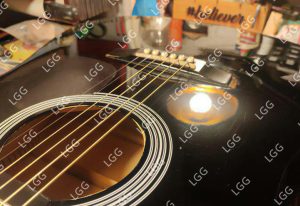
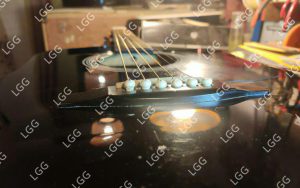
The bridge was lifting and the guitar had a handsome belly
There were loose braces
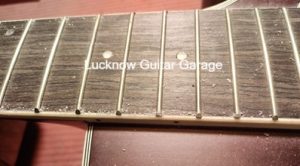
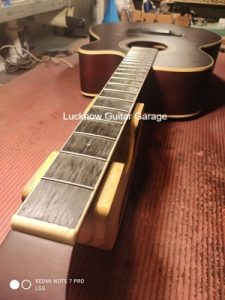
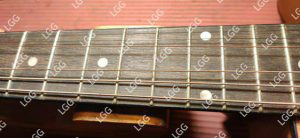
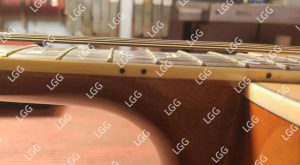
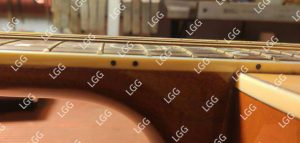
The fretboard had dried up so much that there was fretwire sprout all across it.
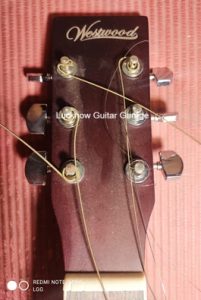
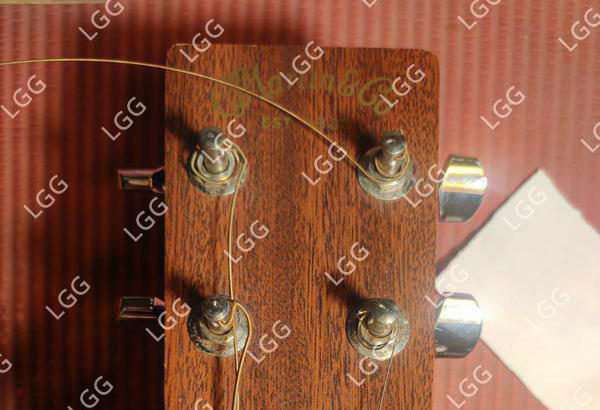
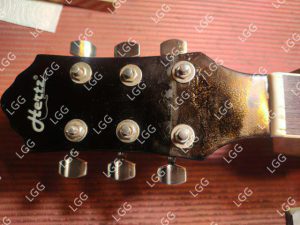
The hardware on the headstock was almost falling off, holding strings that should have been buried last century!
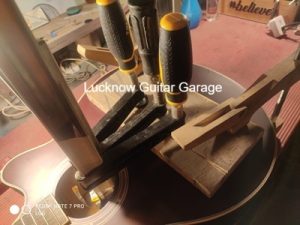
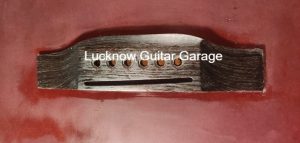
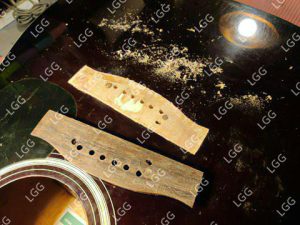
Work began with taking the bridge off. With the bridge off, the field was nice and open to level it
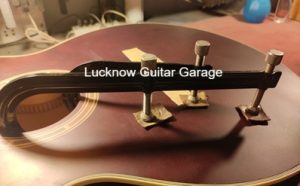
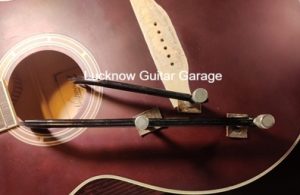
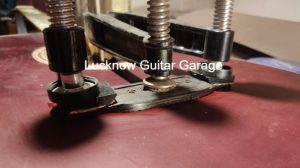
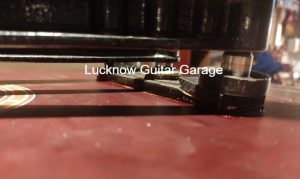
The instrument stayed like this, clamped, for two full days, before I let up on the pressure and removed the clamps. Then it was the turn of the braces, which had come loose in parts, to be reglued to the top.
Unfortunately, these are the before photographs and not after the braces got glued. But I do have a few of the process.
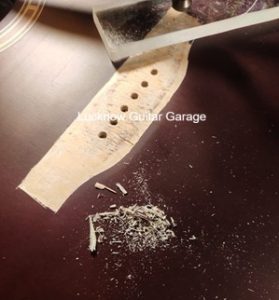
A piece of wood had chipped in the process of removing the bridge. It was duly glued back in place
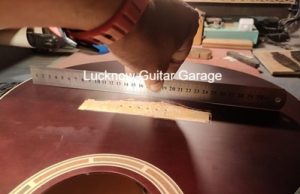
Here you can see the glue-up in progress as also the cleaning up of the bridge footprint. Once all that was finished, I decided to check on how much belly we had been able to remove from the top. A simple test was most encouraging.
That done, the bridge was ready to be glued on.
Again a two-day wait period before the clamps were taken off.
Meanwhile, I dealt with other issues. The fretwire sprout was dealt with and the fretboard was cleaned and oiled, as was the bridge
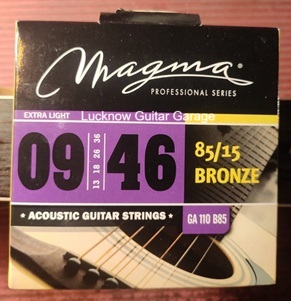
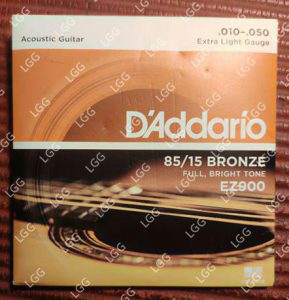
The hardware on the headstock was snugged up, and now the guitar was ready to receive new strings. The owner had provided me with these.
Personally, I would have liked bigger strings, but since the owner had these on him, I put these on.
I’ve said this many times before, but I will say it again. You want your guitar (more so an acoustic guitar) to stay in an environment where the humidity is 45 – 55% all the year around.
If not, you can be assured of some not very good things happening to your guitar.
The centre seam on your guitar top can separate
The braces can come loose
The neck-to-body joint can separate
The bridge can crack in line with the bridgepin holes.
The fretboard can develop a crack just about anywhere
The fretwire ends can protrude out of the fretboard, making playing very painful, if not completely impossible: a condition referred to as fretwire sprout
Dryness in your guitar will also hasten a belly forming behind the bridge
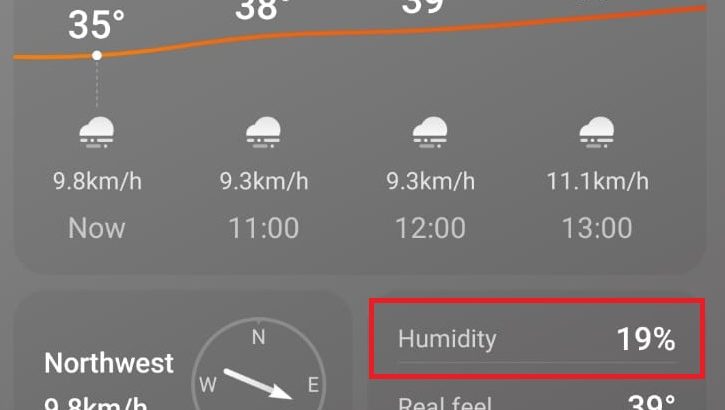
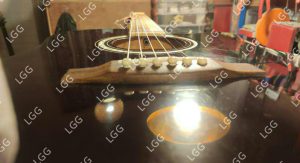
The main photograph of this post is a screenshot taken on Saturday morning and gives you an indication of the humidity level in our city – Lucknow. The situation is more or less the same in all cities of the state and much of North-Central India, and will remain the same come mid-June and the horrible humidity.
But humidity is your guitar’s friend – believe me!
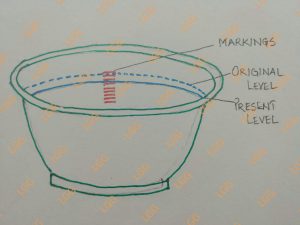
There are many contraptions available in the market to get the humidity at the level where you desire it to be. However, the easiest and the most economical one is to loosen your guitar strings, lay your guitar flat on its back and place a bowl of water inside, through the soundhole.
Now, this exercise should be carried out once you know that you won’t be playing your guitar for at least a week.
Take a marker and put markings at regular intervals on the bowl. Fill it up with water and note till where you have filled it up. Place the bowl inside the guitar and then cover the soundhole with a plastic cover or something that will ensure that whatever water escapes from the bowl, stays inside the soundbox.
Once the water level drops in the bowl you will know that your guitar is drinking water.
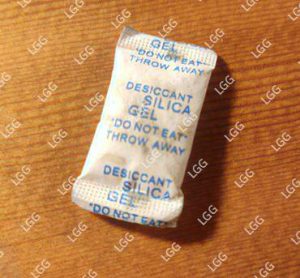
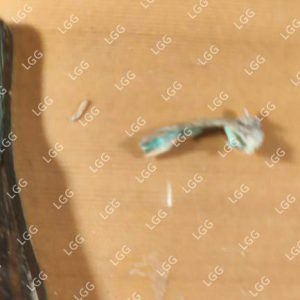
However, before you do any of this, you must check for one thing. Shake your guitar and check if there is something shaking inside. Ball ends, plectrums, dust, etc are fine. However, if you find something like this
please throw it away at the first instance.
This is a desiccant (moisture-absorbing agent) usually found in shoe boxes and boxes holding electronic gadgets to keep them dry. Left inside your guitar, it will suck up even the last bits of moisture there.
Take care of these things, and maybe, you’ll require to see less of me! As the wise adage goes, ‘Better safe than sorry’!!!
I don’t make a distinction when I’m taking in guitars for repairs, brand names and model numbers mean little to me. Yet, I will rarely touch a Rs 3.5 – 4K toy with a barge pole – too much effort, results unsure and the owner dithering on the cost of repairs. But, if the owner is sentimentally attached to the ‘thingy’, understands the limit and scope of repairs, and is willing to pay, I do (try and) repair it. In my journey, I have got to see a broad spectrum of constructions – ranging from the good, the bad to the ugly – if not the entire gamut.
Yet, it is only when you have something sterling in hand do you really appreciate the craft of the builder and the pains taken in putting an acoustic guitar together. Big name guitars like the Martins, the Gibsons and the Taylors do make you take a step back and admire what you have on the work table.
This Martin was one such instrument.
Not a top-of-the-line Martin, but an HPL (high pressure laminate – made by pressing together reams of paper) instrument, its sound quality could never belie its raw materials.
The owner was a young man moving to another city for a new job and wanted bone bridgepins installed in the guitar. But why bone bridgepins?
Now, if you put your mind to it, the strings remain in contact with just the saddle and the nut, which give the instrument its characteristic sound, its volume and sustain (depending upon their material). If there’s a third place that the strings touch and help somewhat in the transfer of sound, it is the bridgepins. Thus, it helps if all three things are of the same material.
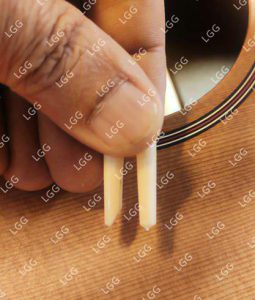
This is what I pulled out of the guitar – perfectly good bridgepins, but plastic, and replaced it with a set of these
But again, like in the case of the nut and saddle, these are not just replaced – or at least should not be. I like to shape bridgepins before installing them.
The one on the right is the original bridgepin, while the one on the left is after being shaped.
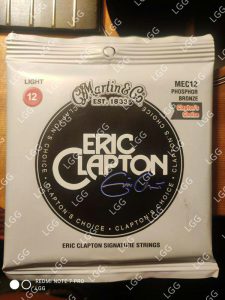
The owner also brought me a set of his strings of choice to be put in.
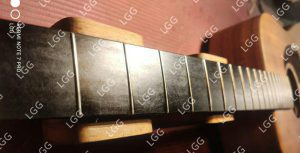
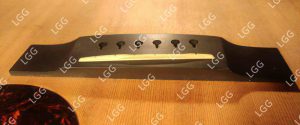
But before all of this was put together, a little cleaning of the guitar was in order. The top, the fretboard and bridge was cleaned and given a coat of love.
And as always, I leave you with some shots of the finished job
This time, the young lady brought in the guitar for high action and a change of strings. I looked up the guitar to find that the bridge was lifting appreciably. I told her that I would need to take the bridge off and then reglue it back again. Wide-eyed, she had nodded sagely then, but I suspect that she already knew that the bridge was lifting and that it would need mending.
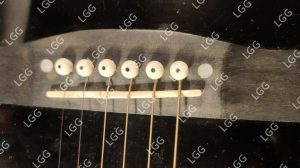
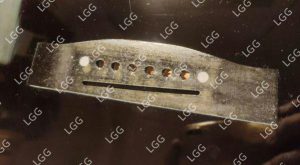
Now, every time I see two extra white dots on the bridge of a guitar, my mind goes, ‘Aw, crap’!!!!
That is because seeing those two extra dots convince me that there is a nut and bolt set trying to hold the bridge down. Extra work getting them out and then plugging the holes.
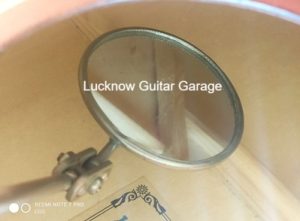
I put a mirror inside the guitar, called the young woman over and asked her to take a look at the nuts and bolts. She saw the hardware, nodded and broke into a broad smile, as if surprised that I knew what was inside!
Anyway, the first thing to be done was to take off the strings and then try to remove the plastic pearloid dots which were hiding the screws.
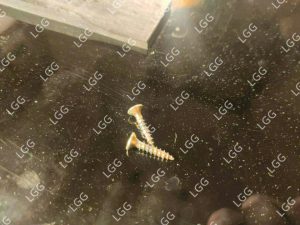
To my surprise, they weren’t simple nuts and bolts but wood screws.
These were binned and the bridge was taken off, which was naturally followed by the labour intensive cleaning process.
While the bridge was off, I noticed that the instrument had quite a bit of belly, which also contributes to high action. And there’s no better time to tackle a belly on a guitar than when the bridge is off it.
Besides, reglueing a bridge to a curved top is never a good idea.
So, corrective and preventive measures were taken
and the guitar was left clamped for 48 hours. After that period, the clamps were taken off and the belly was near negligible, and ready to receive the bridge.
The bridge was thrown on and clamped up for another 48 hours, to give the glue enough time to cure and form a solid bond.
And I’m told all’s well with the world (except Satanyahu and his doddery, demented and senile friend across the pond)!
For the last couple of weeks, I have been unable to post because the website refused to open. I had to contact the hosting site and they worked on it, and now it seems to be ok. But I’m keeping my fingers crossed till this post actually makes an appearance on the internet.
This guitar was brought to me some time back with a host of issues which required that they be tackled in a proper order for the instrument to perform at its optimum.
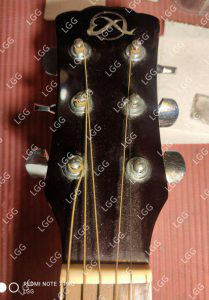
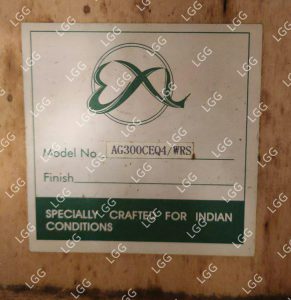
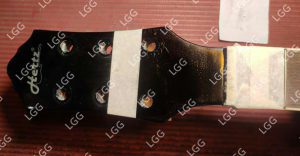
So, you have the headstock and the label in front of you. What would you say the name of the guitar is? ‘EXL’, ‘XL’, or just ‘X’???!!
Whatever. What couldn’t be debated is the fact that it was in a great deal of pain and in dire need of healing.
The bridge was coming off
It had developed a decent belly.
The bridge, itself, had developed a crack.
And the fretboard and bridge were dryer than tinder. Also, needless to say, there was enough dust on it to give you asthma!
As I took the strings off and checked the fretboard for any humidity-related cracks, I saw this
On the last few frets, on the tongue of the guitar, these marks surprised me. It was as if someone had tried to scrape off something.
Anyway, it would all be dealt with in each’s own time. The first thing which needed to be done was to take the lifting bridge off the guitar completely.
As expected, there was a good 1 – 1.5 mm margin all around the bridge footprint that wasn’t cleaned up at the factory and would have to be taken off for the bridge to seat properly and as it should.
Now that the bridge was off, both the bridge and its footprint needed to be cleaned and sanded properly for a good glue joint to be achieved.
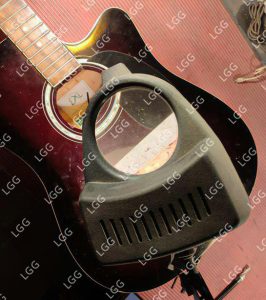
To get a clean sharp line demarcating the lacquer from bare wood, magnification is your friend. So, I called upon my friend to give me a helping hand
That done, I turned my attention to the belly. I peered inside checking for loose braces but thankfully, there were none.
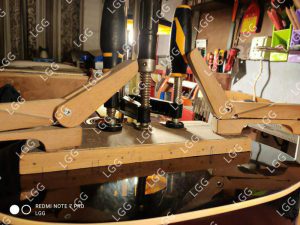
I clamped the guitar top flat and left it that way for 48 hours.
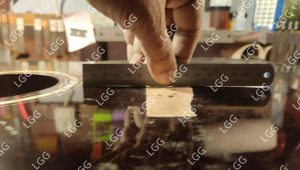
After 48 hours, when I released it from its harness, the belly was gone.
I didn’t get overly happy with the results because I knew wood has a memory and would likely spring back – if not as much as it had blown out originally.
Then I went about doing the little things around the one big task of glueing on the bridge: things like glueing little chips back where they belonged.
and making the crack disappear in the bridge
Then without further ado, I glued on the bridge and clamped it down tight for a period of 48 hours,
While this was left to cure, the other problem areas were dealt with.
The fretboard was given a shave and a balm applied to the fresh new skin. The tarnished fretwires were also burnished.
Also, the headstock was cleaned till it shone and the hardware on it was snugged up.
Once the clamps came off, there was little else left to do but to string up the instrument. But as I picked up the saddle, it looked something like this
Earlier, in my conversations with the owner, he wasn’t too keen on a saddle and nut replacement, something which I always encourage people to try if they have a plastic saddle and nut.
Now, that the saddle needed to be changed, the owner agreed to have a bone saddle put, though the idea of a bone nut still didn’t enthuse him too much.
The new bone saddle was measured, shaved to size and installed, while the strings chosen by the owner were
As always, I’ll leave you with a few final photographs of the finished job
and a little teaser for you.
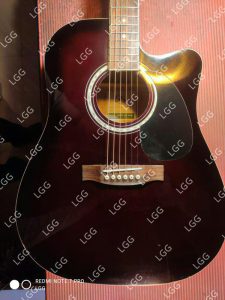
You’ve seen the guitar. What colour is it? Is it burgundy? Is it black, or, is it a burgundy burst???!!!
This #yamaha FS80C came to me with simple problems (and, of course, in a very dirty state) but as I got into it, the problems began unravelling one after another.
But as always, it was a pleasure!
As I was taking off the strings, I noticed that each tuning peg was crammed with string winds
not a very happy scenario. Ladies and gentlemen, boys and girls, we require no more than two-and-a-half to three-and-a-half turns on the wound strings (Low E to G) and five to six turns on the unwound strings (B and e). Those number of turns on the tuning peg will give you maximum tuning stability and accuracy.
If you don’t know how to do it, I encourage each one of you to learn how to string your own guitars. No point running to this shop and to that character to get new strings put on your instrument. It should come as easily to you as getting the tank of your bike filled with petrol!
The fretwires had some decent amount of pitting (wear)
and the fretboard was dry.
Also, the plastic nut and saddle were all but crushed under the tension of the strings. Also, the saddle was leaning a bit too much in its slot. I suggested to the owner that they be changed and he agreed to get it done.
Here, I would like to clarify that when I say that ‘I swapped the plastic nut and saddle for bone elements’, it is not as literal as that. There are a lot of measurements involved, which are dialled into the elements by sanding them appropriately. Thus, each nut and saddle put into an instrument is specific to that instrument and will (generally) not fit another instrument. That is why even this operation takes time and a lot of effort.
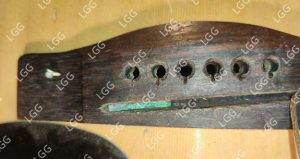
As I removed the saddle from its slot and was greeted by this
a bit of worn out card sitting under the piezo element, but only where the ‘e’ and ‘B’ strings would ride. I pulled out the paper shim and saw this:
There was a ledge that had been created in the bed of the saddle slot. Look carefully at the slot and you will be able to see the ledge.
My understanding is that while the slot was being routed, either the router bit slipped, or, the person doing it got distracted.
Anyway, the problem had to be rectified and certainly not with a piece of card. So, I pulled out tools that I had bought knowing I would need them some day and went to work on the saddle slot.
The tool on the left almost functions like a micro-chisel and the one on the right is actually a file with a coarse end and a fine end.
I went to work with these, slowly and patiently carving away at the ledge, trying to level it with the rest of the saddle slot bed. Interestingly, the walls of the slot had a problem. While placing the saddle in the slot, the treble side would grip it much firmer than the bass side.
So, I shaved away portions of the treble side wall till the saddle sat in perfectly, and with the handy little file, I sanded the bed as smooth as I could.
And that was the debris I managed to collect.
That was the major work done on this instrument. The rest was routine
oiling the fretboard and burnishing the fretwires
snugging up the hardware on the headstock
stringing up the instrument after oiling the bridge and putting in a new bone saddle.
The new bone nut had corners a little too sharp for my liking, so I knocked them down with a file.
And, of course, the customary few parting shots of the guitar.
P.S.: In a recent development, the owner wasn’t too thrilled with the amplification he was getting with the new bone saddle but was happy with what the original plastic saddle was doing. I think he swapped out the bone saddle.
Just a quick one this Sunday to keep all you loyal readers of this blog in good humour. But I promise you there is big one coming.
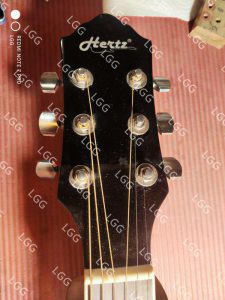
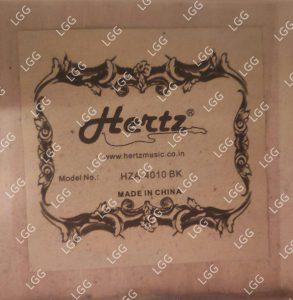
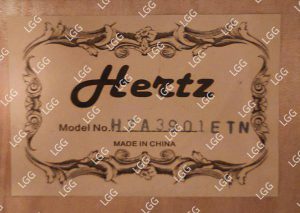
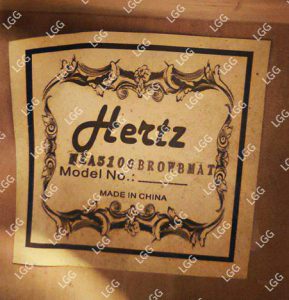
This Hertz came to my work table with a simple request of a change of strings and the regular cleaning and oiling.
Assessing the instrument, I am happy to report – as I did to the owner – that it wasn’t a bad instrument by any stretch of imagination. I have seen some very average instruments carrying some very big brand names.
I suggested to the owner that he swap the factory-fitted plastic saddle and nut for bone elements for a much improved volume and sound quality. He agreed.
Another reason for the change was prompted by the original saddle being a couple of millimeters smaller than the slot cut for it. Look carefully in the photograph above and maybe you’ll be able to make out.
Otherwise the fretboard and bridge were very dry from months of neglect.
And if you wanted more proof of the neglect,
Oh, whatever! No big deal.
I just went about my work and cleaned up everything the best I could.
The guitar was a whole new instrument – or so it seemed – once I got through with it.
And while I was trying to string it up, I thought the tuning machines were just a tad loose. So, all the ferrule nuts and the screws holding the tuning machines to the headstock were snugged up.
Remember how I say that the same kind of guitars, or, guitars with the same kind of problems seem to follow each other to my work table? Well, here is another prime example.
Some weeks back, this instrument came back to me
Those of you who are regular readers of my blog, will remember this one. For those of you who would like to read what work was done on this one, you can do so here
The bridge split that had cured so handsomely, had returned to be worse than before.
And not just the cracking, the bridge was even lifting.
The owner was sure that he did not want the old bridge repaired but wanted a new one to take its place.
Easier said than done, as I learnt during the last repair. But if it had to be done, it had to be done!
As I was taking off the bridge, I realised that there was a belly behind it. For the new bridge to stick properly, one had to give it as flat a surface as one could possibly have.
So, the first thing that I did after the bridge came off, was to clamp it flat with some heavy duty clamps.
After 48 hours of remaining clamped, when the pressure was released, the results were pleasing
With the clamps off, I tried to figure out why the bridge had come loose and why it had cracked again. The tell-tale marks were found here
This crack in the top told me that it was this that helped create a crack in the bridge. However, a disconcerting thought crossed my mind. If a crack in the top aided a bridge crack, why could it not cause a crack in the bridgeplate too? My heart sank at the thought of a split bridgeplate.
If that was so, then it would be useless to replace the bridge on it, for that too would crack soon. I peered through the soundhole, keeping my fingers crossed, half expecting a big, old split to stare back at me, but thankfully, the bridgeplate was solid without any sign of trauma.
Quickly, I went about repairing the top, such that the split itself became invisible.
While I was working my mind was also searching for reasons why the bridge had lifted again. It was then that I saw it
This was a remnant of the spruce veneer of the multi layer top. It was amazing how evenly it had broken off, as if someone had cut it with an X-acto knife. You must forgive my mistaking it as a mark left by the bridge during the factory assembly process, when I removed the bridge the first time around. This little border of spruce prevented the bridge to stick to the top properly.
Now that I knew, I went about removing this border under lights and magnification.
After spending about 45 minutes carefully removing the border, such that the finish remained undamaged, the footprint looked like this
Notice also that there is no sign of a crack in the top!
Thereafter began the process of glueing the bridge to the top. As I placed the new bridge on the old footprint the holes refused to match. If I matched the holes, there was something like a 2 mm of the bridge footprint exposed behind the bridge three-fourth of the way.
There was nothing to be done except plug the holes and redrill new ones.
Out came the violin sound posts and I went to work. Cutting each plug in line with the top and then sanding it flush, slow and tediously, the job got done in the end.
With everything else in place, it was time to slap on the bridge
The entire exercise ended two days later when the clamps came off. The fretboard and the dry, new bridge were given a coat of love, and a new saddle was put in place of the old bent saddle.
The owner decided to put in strings on his own and so that is how the instrument was returned – without strings but with the saddle standing in its slot!
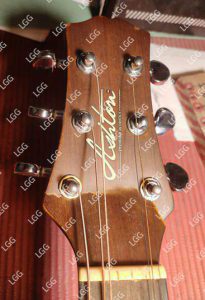
A while back this #ashton came to me in this state
Not only was the bridge split through the line of the bridgepin holes, a (possibly) leaning saddle had also split it open in line with the saddle slot. See? If that was not enough, the bridge was lifting so much, I had to probe and poke to see what was holding it on!
If it had been just one of the splits and not both together, I would have still repaired the bridge, why, you will learn soon. But this one was beyond redemption and just had to go.
It wasn’t a bad guitar and the construction quality was quite alright, except for the dry fretboard,
quite a common ailment in the instruments that come to me, but even the best guitars can fall apart if not taken care of properly.
With this #ashton, there was nothing which could be done except replace the bridge. Now, I am always wary of replacing bridges for I don’t have the space to possess the wherewithal to fabricate a bridge from a piece of wood. I am left with two or three shapes of bridges that are available in the market.
Given the number of guitar companies out there, each bridge is slightly different, and if I have to replace a bridge, I choose the one closest in shape and size to the original.
But first the original bridge needed to come off and it did pop off though the (CA) glue used to fix it to the top refused to let part of the bridge part with it.
After the partial cleaning, the bridge footprint looked like this
There was still lots of CA glue deposited on it, which needed to be removed, but more on that later.
Without the bridge on, I could plainly see that string tension had worked on the bridgeplate and a not-very-good-quality bridge, causing it to split. Just from the outside, I was sure that the bridgeplate too would have been split, but peering inside, I was happy to note that that tragedy had not struck. The bridgeplate, though, had buckled somewhat under string tension.
So, the next logical step was to remove the belly and try to straighten out the bridgeplate.
While this process was on, I selected a bridge that could replace the original
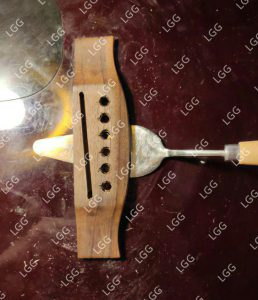
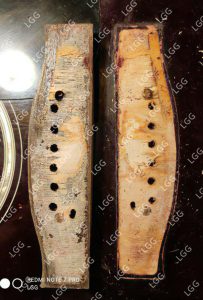
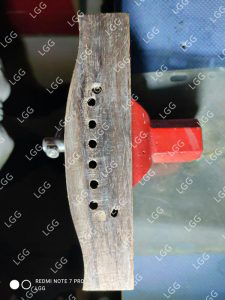
The replacement bridge had bridgepin holes marked but they had to be drilled through. That was done and then the diameter of the holes was checked by pushing bridgepins through them, to see where they sat.
Almost all holes needed to be reamed, and so, each hole was reamed some till the bridgepins sat perfectly.
Then I tried setting it on the guitar itself by pushing two outside bridgepins through the bridge and the top.
Carefully inspect the corner of the bridge closest to you. Do you see it?
While the ‘e’ bridgepin hole lined up perfectly with the hole in the top, the other five moved progressively inside the line of the holes in the top. The only solution was to plug the original holes in the top, stick the bridge and then redrill the holes, so that the bridge sat in the right place (without affecting the intonation). AND THAT IS EXACTLY WHY I DITHER FROM REPLACING BRIDGES!
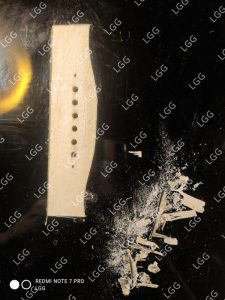
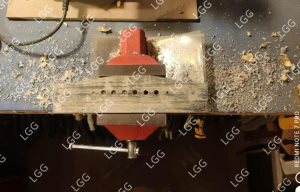
So, I went about plugging the holes with these spruce wood violin sound posts which I had bought many, many moons ago, because I knew one day I might have use for them – exactly for this purpose. That day had come.
Very briefly, sound posts are installed inside violins and other instruments belonging to the violin family (violin, viola, cello, double bass). Not only does the sound post support the top of the instrument, it can also alter the tone dramatically, and completely change the sound depending on the position or angle.
While I enlarged the holes in the top a bit to receive the posts, I sanded the posts themselves a bit so that the fit would be a snug one.
After all the holes were plugged they were cut and sanded flush, such that if one ran a finger along them, he would not feel even the slightest lip.
Now the stage was set for the new bridge to be stuck to the top. I did that and made it sit perfectly on the footprint of the original bridge, but – believe it or not – forgot to take photographs of the process!!!
Anyway, the bridge stayed in clamps for two days, during which other areas of the instrument were given love: the headstock, the hardware on it, the fretboard, the fretwires…
Fretboard being cleaned of dirt and grime deposits
After the clamps came off, new holes were carefully drilled and the new, very dry bridge was given a coat of love which made it shine, while making the grain in it pop out.
All that was left to do was to string up the instrument and see if everything was in order. The owner had chosen these strings for his guitar.
Here are the final few parting shots of the #ashton, looking every bit the billion dollars it wasn’t! The bottom line though, was that the owner was mighty pleased with the results.
Oh! Did I mention that the instrument got a lovely set of bone nut and saddle too? It did!!
HAPPY NEW YEAR, FOLKS!!! May the year be one of fulfilment, peace, happiness and prosperity!
Some time ago, this older #Yamaha F310 came to me with a complaint of action so high that it was unplayable beyond the 5th, 6th fret.
It had a rising bridge,
which in the process of its lift,
had pulled the top too along with it, giving the instrument a more-than-healthy belly. A look inside showed the main cause of the problem – the ‘X’-brace arm on the bass side had come unglued.
Seeing the loose brace, the belly and the rising bridge, I was pretty confident that the action problem could be solved pretty easily. That was my undoing.
More on that later.
I started work with taking the old strings and the bridge off the guitar.
Not the cleanest of jobs I have done, yet nothing that I could not remedy. So, the first order of business was to get all the fibers of the top glued down to create an even surface for the bridge to reglue to.
Once this was taken care of, I reglued the loose ‘X’ brace arm, which to my understanding, was the main cause of the belly bulge and action.
The reflection in the mirror shows the brace pushed against the top, and if you look really carefully, you’ll be able to see the glue squeeze-out too.
After this was taken care of, work to cut the belly down to size began.
With each 48-hour effort, the belly was reduced some. The following photographs show the results of the last two efforts
Once I was satisfied with the results, it was time to bring the bridge and the top together.
And while the bridge remained clamped for another 48 hours, it gave me time to work on other neglected areas of the instrument – like the fretboard.
Oh, and there was also an under-saddle pick-up attached, which the owner felt had outlived its utility. He asked me to remove it. Removing the under-saddle piezo element meant creating a shortfall in the height of the saddle.
Considering all the work done on the guitar, I was sure that the saddle without the piezo element would fall terribly short and would have the strings flapping around on the fretboard. So, I buttressed the saddle not with one, not with two, but with three plastic shims. It helped that #yamaha uses plastic nuts and sadddles in the F310.
Now, all that remained to be done was to string up the instrument. The owner had chosen these
I tuned up the guitar and to my horror, it had an action high enough for a double-decker bus to pass under! I tried shaving the saddle, I tried fiddling with the truss rod, I even dialled in a lower than usual action at the first fret, but all these brought about mere cosmetic alterations.
It was then that my attention went to how and why the top under the fretboard extension had broken loose and was jutting forward in the soundhole.
I could make out that the neck block inside the guitar had come loose, and tilted forward, and with it moved the portion of the top under it. In fact, so severe was the move that the portion of the sides glued to the neck block had also moved – just about an inch on either side and along the very top of the neck-to-heel joint. I forgot to take photographs of it.
My earlier thinking that I would just be able to tap the neck block back into place, after smearing some glue behind it was grossly flawed.
Unfortunately, the neck block must have moved under string tension during the months of extreme heat, when the glue must have melted somewhat. The glue then dried on the block, sealing it in a tilted position, pulling forward everything in its contact, thus leaving no room for intervention.
The only way to solve the problem was a proper neck reset, which was too much for this old guitar – the owner’s first. As sentimental value goes, the owner would have to continue to play up until the 5th, 6th fret – after all the time and effort put into the instrument.
Though each instrument which I fail to correct, saddens me, this one was probably the saddest of all, for I knew that the owner had set his heart on playing his beloved guitar right up and down the neck and not just on the first five frets!
To those unfamiliar with the brand name, Seagull Guitars and Simon & Patrick are sister brands under the Godin company, a Canadian giant (To know its worth just check out its selling price in India).
I received this model to work on, recently.
The owner, a knowledgeable young man, brought in the instrument after he saw the action rise on it and discovered that the bridge was rising.
As I went over the excellent construction of the instrument, one point rankled me – the nut and saddle on such a pricey instrument was of a micarta-type material. Now, don’t get me wrong. I’m sure there are many who find nothing wrong with the material, but in my book, nothing matches up to bone except ivory! If you don’t fancy too bright a tone, I could do buffalo horn for you.
Anyway, the customer was all for the bone replacement after I extolled its virtues to him.
Strings were taken off, before the bridge was gently prised off. Imagine my surprise when I discovered that the bridge had been glued on with regular wood glue (they still find the time to do such things???)!
I’m joking, of course! In an ideal world you want the bridge to be glued on to the top with wood glue, so that when people like me need to take it off – for whatever reason – it comes off clean without damaging itself or the top.
But did I say it came off clean? It did, well almost, except it pulled up a little flake on the treble end of the top. Nothing that good old wood glue wouldn’t cure.
While this dried, I went to work on the bridge.
Despite getting glue and little wood fibers off it, there was still an odd boundary marked on it, probably left by the margin on the top.
Do you see it? I cleaned that up and I cleaned up the bridge too. But then there was still a step to go before I could glue the bridge to the top: checking whether the bridge was flat enough to be stuck to the top.
Simple, mark it with pencil and then keep sanding till the pencil lines disappear. But actually, not so simple. It required a lot of elbow grease, and with it, time.
Finally, I got it looking like this
With everything ready, I glued and clamped the bridge to the top.
While it cured, other areas of the instrument were paid attention to like the fretboard, the fretwires and the hardware on the headstock.
There was just a bit of a problem: the nut was just a hair short in its slot. Meaning, the width of Seagull guitar necks is slightly more than what I am generally used to working on. It was a mistake and I told the owner so. He was gracious enough to say that if the instrument played correctly, he did not have a problem with minor aesthetics.
So, here are a few close-up shots of the nut in the slot.
Meanwhile the glue had cured under the bridge and the clamps were taken off and the bridge was given a ‘coat of love’. Look at it glow!
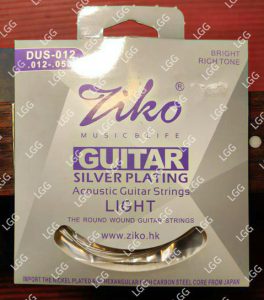
The strings the young man chose were Elixir 12s.
With a swanky new bone nut and saddle and fresh set of strings, this baby could sing (I knew that without these three in place).
When the owner came to pick up the instrument, he was pleasantly surprised – maybe even thrilled!
Here are the parting shots not just of this blog post but the last blog post of 2025.
Have a blast ushering in the New Year, but stay safe, people. More importantly, keep your guitars safe!!!
This landed on the workbench recently, and I still haven’t been able to figure out its name. The label read one name and the headstock quite something else but quite illegible.
A completely laminated instrument, it had some years on it and the job card was a litany of woes.
A probable reason for that could be that it was not a personal instrument but belonged to an office, passing through many hands.
So, the guitar had a healthy belly, a crushed saddle was leaning in the bridge, and the bridge itself was lifting (naturally the action was sky high).
Did you notice something? Someone put the saddle in the reverse position. Wonder who was playing what on this instrument!
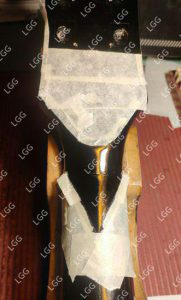
If that was not all, the guitar was missing a couple of ferrules on the front of the headstock
The dehydrated fretboard was sporting a large crack, spanning a few frets,
And, of course, the fretwires were tarnished while the fretboard itself carried a complete DNA record of who all had played it – or it seemed so.
The first thing to do was to take off the bridge to gain access to the entire area, so that the belly bulge could be dealt with.
And maybe, it’s time that I stopped repeating that the bridge was glued on with cyanoacrylate (super) glue.
With the bridge off, efforts began to push the belly out of the guitar.
After a 24-hour clamp time, the belly got reduced but had not gone completely. A second attempt was made with changed clamping positions.
Another wait of 24 hours, after which the belly was reduced to negligible levels. While it was in clamps, I decided to clean the bridge of all the CA glue and wood remnants.
After the clamps were removed, (the belly seemed appreciably reduced) the bridge footprint was cleaned up and readied to receive the bridge. For a good glue-up job, a good wood-to-wood joint is desirable.
Now, with everything in readiness, the bridge was glued to the top, clamped and left to cure for a good two days.
Of course, before the glue-up, I dealt with the crack in the bridge. Complicating matters was the fact that there was not one crack running through but two cracks that seemed to line up.
The two cracks were dealt with and this is the result
Also, the fretboard was cleaned of all its crud and the good wood shone through.
Also, a new saddle replaced the old crushed one. Since the owner(s) did not wish to put in too much money into it, the replacement saddle was also made of plastic.
The missing ferrules were replaced, screw holes were plugged to receive screws and hold the tuning machines in place.
Strung up, I was happy with the results. So was the owner(s).
This Fender FA 125-CE which came to me recently – was, in many ways – a mixture of opposites. Quite clean otherwise, its headstock and the portion between the soundhole and the bridge, under the strings, was proof that dust was never removed from those portions of the instrument.
Though it seemed like quite the singer, its bridge had lifted, and had even pulled a belly in the top, behind it.
The ideal way to deal with a belly is to first remove the bridge and then go about straightening the top. If the bridge is lifting, it only helps things. Remove bridge, remove belly, clean both surfaces and reglue bridge!
With the bridge off, the first task was to clean the underside of the bridge and its footprint on the top.
Do appreciate the second outline outside where the bridge was actually seated. The outer boundary marks till where the finish on the top needed to be cleaned for the bridge to seat properly on the top. Both parts were cleaned with a lot of effort
Meanwhile, with the bridge off, I could see perfectly how warped the top had become.
That was the state of the top. Needless to say that the bridge too had got warped some.
The patient was rushed into intensive care and treatment began soon after.
The photographs above show the first 24 hours, which had some degree of impact
A second 24 hours was needed with some ingenious clamping
and after the clamps were removed, the belly had got reduced further (but had not gone completely).
And while, the instrument stayed clamped, I worked on other areas of the instrument. The (plastic) saddle, for example, was curling and tilting in its slot – never a good thing for intonation. I told the owner that things would improve dramatically if he were to get a bone nut and saddle put in the instrument, and he agreed.
The factory-fitted plastic saddle is on the left and the new intonated bone saddle on the right. Can you see the difference in how straight the bone is?
Anyway, to those unfamiliar with these things, replacing a nut and saddle, is hardly ‘replacement’. Minute measurements make all the difference in a well-seated nut or saddle, and the the sound produced thereof.
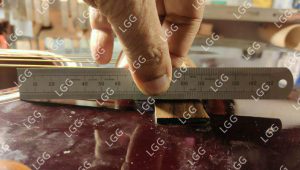
Just to give you an example of the measurements involved
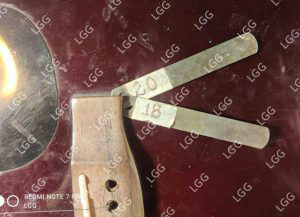
You can also see the area marked off to be removed from the saddle.
Meanwhile, the nut slot too, was readied to receive the new bone nut
The headstock too, was cleaned and polished
The fretboard, dry as tinder, (as also the bridge) were shown love, cleaned and oiled
And then began the process of glueing the bridge to the top.
Enough glue, enough clamping pressure and enough time, generally, makes for the perfect joint.
While the glue dried, I again found something to work on. Lacquer had chipped off near the end block, on the top, creating a small crater.
I filled it up and sanded it smooth to a point that when I was taking a photograph, I had difficulty finding the touched-up area.
The owner chose these strings to go on his guitar
But before I threw these on, there was a little graphite powder needed in freshly cut nut slots.
I strung up the guitar, waited a day and then called the owner and handed it over. The owner was pretty happy with the outcome.
However, a week or so later, he called me to inform that the bridge was lifting again! I called the guitar in, again took off the bridge, again cleaned up the two surfaces, again clamped and reglued it.
Hopefully, the bridge will hold fast now!
And as often as I do, I forgot to take photographs of the finished job!!!!!!!!!!!
I say ‘The return…’ because it is after a long-long time that a Yamaha, and that too a F310, came visiting me!
I had started to think that going by my consternation – which I have seldom tried to hide – for this particular model (sold in India), owners had shied from approaching me. For those of you who don’t know the reason for my angst, you need just go to the search bar of this blog and type in Yamaha. See what (all) you come up with!
Anyway, when the young man walked in with a Yamaha F310, my eyes just rolled up of their own accord, and he just stopped dead in his tracks. I controlled myself and asked him how old the instrument was. I think he said eight or 10 years old, which immediately brought relief to me, and I remember telling him, “Then there’s hope for you and that thing”!!
What was it in for? Just action adjustment, fresh strings and itty-bitty things here and there. As I inspected it, my wonderment grew by the second. Despite its age, there was no more than a hint of a belly on it. The bridge was stuck fast to the top and despite the crusty old strings on it, it carried a punch.
As my eyebrow rose in pleasant surprise, I had thought to myself – maybe aloud – ‘This must be from a time when Yamaha India had not become obsessed with money-making, when it started putting in crap pieces of wood together and started calling it a guitar”!
So, I got down to work and began to take the strings off (of course, after measuring the action on it). But as I got to the headstock, a nightmare stared me right in the face. There, smirking back at me, were six of the best Luthier Knots, waiting for me to undo them!!!
TIME FOR A RANT! Ladies and gentlemen, boys and girls, you don’t need a knot to hold a guitar string in the tuning peg. It is not a string string; it is metal. Wound right, guitar strings will stay wound on their respective tuning pegs till kingdom come! But should you decide to change strings, those knots will convert a 10 min job into a 45-min one, and if you’re anything like me, you’d be mouthing profanities for all of those 45 minutes!
I remember getting myself a drink of water after I finished taking the strings off.
A thorough cleaning of the body followed and as I kept the guitar aside, I went to work on the saddle to reduce the action. Another rant: you do not play with the truss rod to reduce action. You shave the saddle to reduce action! The truss rod has been provided to dial in an amount of relief that you find comfortable. IT IS NOT MEANT TO REDUCE ACTION! Yes, when you dial in or dial out relief, it affects action but it does not mean that action is to be corrected with the truss rod.
So, saddle shaving it was.
You will be pardoned for seeing sniff lines, but in fact, that’s just dust from the plastic saddle that Yamaha India so generously provides to its patrons.
Anyway, once I had taken off as much as needed to be taken off, I slipped the saddle back in its slot.
The fretboard, dry as tinder, and with tarnished frets
was cleaned and love shown to it, after which it shone. The bridge too, was paid attention to.
Time to restring and the moment of truth. I think the owner had provided me a set of strings to put on which I did, and WITHOUT any knots on the tuning pegs
I’ll leave you with the last few photographs to admire the F310!
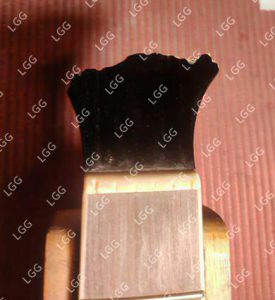
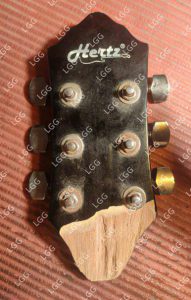
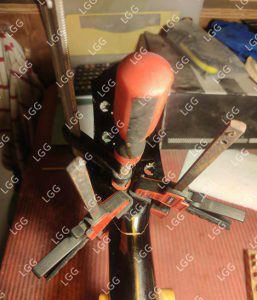
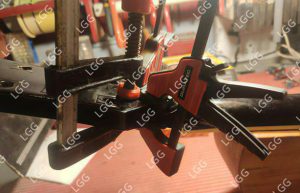
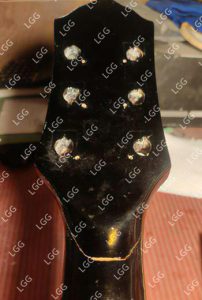
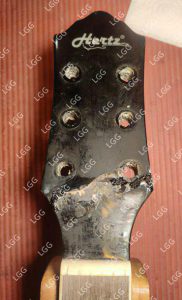
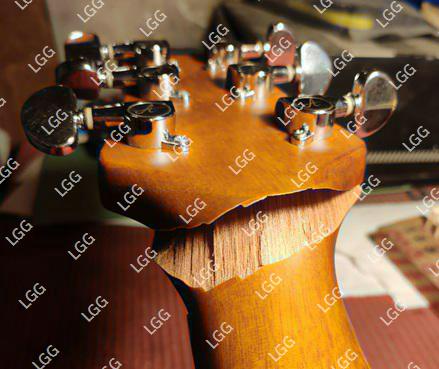
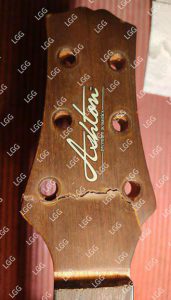
with not just a cracked but a lopped off headstock
Thankfully, the owner, a sensible young lady, did not try and get adventurous with glue, but instead, brought it to me.
Even if the headstock had not fallen off, the guitar seemed to have seen better days. That’s proven by the rust on the hardware on the headstock.
Besides, the fretboard and bridge were in a pitiable condition – dried to tinder.
I dry-fitted the two parts and they fit well, telling me that this would turn out to be a good and strong joint.
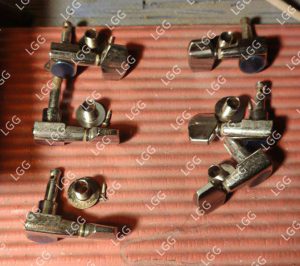
The next step was to take the hardware off the headstock, so that all that weight of the metal would not act against the glue trying to keep things together.
As I kept each tuning machine and its parts in order, I did clean and polish it up, so when it came time to put them back on, I would not waste any time cleaning them.
Thereafter, I applied glue and clamped the two parts together. That was the smallest job. Cleaning up the squeeze-out from around the clamps was the bigger problem. That too was done.
After two days of drying, I took off the clamps and as I had imagined, the joint was a good clean one.
However, while the seam was more than evident on the neck, on the face of the headstock the glue line was ragged and with missing pieces.
What followed was a very involved process of colouring, drop-filling, sanding, more drop-filling, more sanding till everything appeared seamless, well almost!
I had marked off the area to be sanded and worked within its boundaries. Later, that area needed a coat of something to make it similar to the rest of the headstock. Spray can lacquer seemed like a good bet.
Again, I masked off the area to be sprayed and sprayed on lacquer. That was my undoing, for I underestimated how far the overspray could go. Do remember that this is two surfaces that I am talking about, each of which required different masking and different treatment.
I was very satisfied with how things turned out on the neck of the instrument but I realised I could have done a better job on the face of the headstock.
While the paint dried I went to work, cleaning up the entire guitar with special attention to the fretboard, the fretwires and the bridge.
After all the spray and paint job had dried up, I went about putting on the tuning machines
and the strings followed. The owner gave me these strings to put on
This was the real test of the job – whether it had been done well. If the joint did not hold, all the effort would have been for nought.
But everything did hold together.
The owner was thrilled with the results and even made little of my regrets about how the overspray had spoilt the entire look of the headstock. I was ready to sand it back and respray/buff it out evenly but she would have nothing of it.
In truth, from two feet off, one would not be able to see the overspray, but yes, to the player, or someone sitting very close, it would be painfully evident.
The young lady left me a glowing review, one that left a very satisfied glow on my face. However, you will never be able to read that review even if you try to find it, for it never appeared. The young lady had sent me a screenshot of the review she posted on Google and that is how I know there was a review of services rendered.
I hunted high and low for some contact in Google, even asked friends, customers if someone knew of a way. Finally, sifting through pages of the Net, I found a way to contact Google, and they asked me for this, they asked me for that and finally wrote back to me saying they couldn’t find anything wrong with my account!
So that was that. I seek satisfaction in the fact that my customer is happy with the work I did on her instrument.
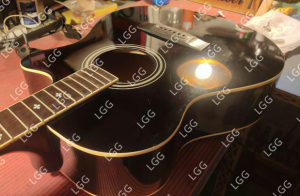
I have often commented on the strange coincidence that similar instruments or those with similar problems seemingly find their way onto my workbench. If you’ve been a regular reader of my posts, this is the third consecutive black dreadnought to stumble into the Lucknow Guitar Garage, and who’s to know that there are no more to follow???!!!
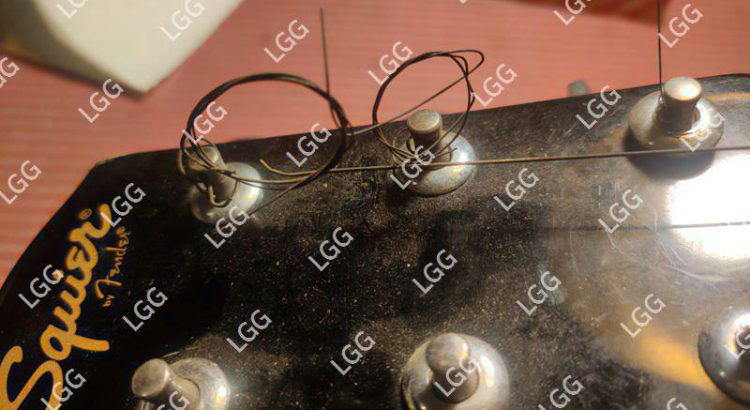
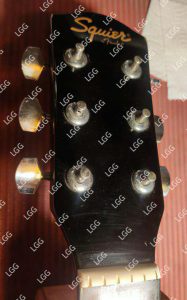
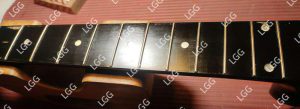
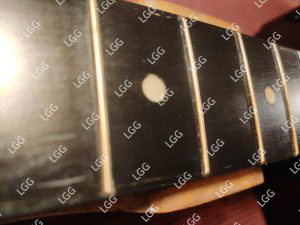
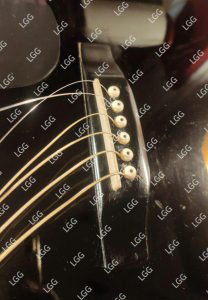
This Squier came to me with its bridge having lifted enough to park a few trucks in the shade!
That was the problem but what caught my eye immediately, was the ‘modern art’ on the headstock of the guitar. The extra length of the strings had all been twisted into circles at each of the posts. I saw it and now I can’t unsee it!!
So, here goes my why-not-to-do-it explanation and a rant to boot!
The manufacturer (in his goodness) provides strings of a certain length. He does not know what type of a guitar you possess. Maybe you’re a jazz music enthusiast and have an archtop, endpin-type string restrain with a floating bridge.
This type of guitar takes up much more string length than your regular flattop guitar. This does not mean that because the manufacturer has given you that much string, you HAVE to use up every micro millimetre of it even if you own a flattop! Realise that you are at complete liberty to snip off whatever falls beyond the post!
Your twisting and turning the extra length into various shapes (modern art), only does one thing: creates a string buzz that I’ll be damned if you can make out where it’s coming from. I think ‘experts’ call it a sympathetic vibration.
In any case, if you think your headstock is looking pretty, it does not (not at least to my eyes).
Anyway, getting back to the guitar on my workbench, I did don surgical gloves before I touched the strings – or anything on it. Those were probably the crustiest strings I had laid eyes on.
Work began with marking the bridge outline on the top, taking it off, cleaning its underside and its footprint on the top.
Once that was done, it was time to reglue the bridge. Now, this was the time when the rain was beating down, thick and fast and there was excessive amounts of moisture in the air. One had to be careful to give the glue enough time to cure.
Glue was liberally applied to both surfaces and then they were clamped together
This arrangement was left undisturbed for three days.
However, in those three days, other areas of the guitar were paid attention to – areas that needed attention direly.
The headstock, tuning machines were cleaned and burnished.
The fretboard was cleaned and oiled. The fretwires were cleaned and polished
And then when the clamps came off, I gave the entire guitar body a proper bath and then a polish. Thankfully, all the crud deposited on the body came off and the guitar shone like new!
Then, I let the guitar rest for a full day before throwing on strings.
Meanwhile at the headstock end, things looked like this
I’ll leave you to it with these last two photographs
Lorem ipsum dolor sit amet consectetur adipiscing elit. Quisque faucibus ex sapien vitae pellentesque sem placerat. In id cursus mi pretium tellus duis convallis. Tempus leo eu aenean sed diam urna tempor. Pulvinar vivamus fringilla lacus nec metus bibendum egestas. Iaculis massa nisl malesuada lacinia integer nunc posuere. Ut hendrerit semper vel class aptent taciti sociosqu. Ad litora torquent per conubia nostra inceptos himenaeos.
Lorem ipsum dolor sit amet consectetur adipiscing elit. Quisque faucibus ex sapien vitae pellentesque sem placerat. In id cursus mi pretium tellus duis convallis. Tempus leo eu aenean sed diam urna tempor. Pulvinar vivamus fringilla lacus nec metus bibendum egestas. Iaculis massa nisl malesuada lacinia integer nunc posuere. Ut hendrerit semper vel class aptent taciti sociosqu. Ad litora torquent per conubia nostra inceptos himenaeos.
Lorem ipsum dolor sit Non Existing amet consectetur adipiscing elit. Quisque faucibus ex sapien vitae pellentesque sem placerat. In id cursus mi pretium tellus duis convallis. Tempus leo eu aenean sed diam urna tempor. Pulvinar vivamus fringilla lacus nec metus bibendum egestas. Iaculis massa nisl malesuada lacinia integer nunc posuere. Ut hendrerit semper vel class aptent taciti sociosqu. Ad litora torquent per conubia nostra inceptos himenaeos.
Lorem ipsum dolor sit amet consectetur adipiscing elit. Quisque faucibus ex sapien vitae pellentesque sem placerat. In id cursus mi pretium tellus duis convallis. Tempus leo eu aenean sed diam urna tempor. Pulvinar vivamus fringilla lacus nec metus bibendum egestas. Iaculis massa nisl malesuada lacinia integer nunc posuere. Ut hendrerit semper vel class aptent taciti sociosqu. Ad litora torquent per conubia nostra inceptos himenaeos.
Lorem ipsum dolor sit amet consectetur adipiscing elit. Quisque faucibus ex sapien vitae pellentesque sem placerat. In id cursus mi pretium tellus duis convallis. Tempus leo eu aenean sed diam urna tempor. Pulvinar vivamus fringilla lacus nec metus bibendum egestas. Iaculis massa nisl malesuada lacinia integer nunc posuere. Ut hendrerit semper vel class aptent taciti sociosqu. Ad litora torquent per conubia nostra inceptos himenaeos.
Lorem ipsum dolor sit amet consectetur adipiscing elit. Quisque faucibus ex sapien vitae pellentesque sem placerat. In id cursus mi pretium tellus duis convallis. Tempus leo eu aenean sed diam urna tempor. Pulvinar vivamus fringilla lacus nec metus bibendum egestas. Iaculis massa nisl malesuada lacinia integer nunc posuere. Ut hendrerit semper vel class aptent taciti sociosqu. Ad litora torquent per conubia nostra inceptos himenaeos.
Lorem ipsum dolor sit amet consectetur adipiscing elit. Quisque faucibus ex sapien vitae pellentesque sem placerat. In id cursus mi pretium tellus duis convallis. Tempus leo eu aenean sed diam urna tempor. Pulvinar vivamus fringilla lacus nec metus bibendum egestas. Iaculis massa nisl malesuada lacinia integer nunc posuere. Ut hendrerit semper vel class aptent taciti sociosqu. Ad litora torquent per conubia nostra inceptos himenaeos.
Lorem ipsum dolor sit amet consectetur adipiscing elit. Quisque faucibus ex sapien vitae pellentesque sem placerat. In id cursus mi pretium tellus duis convallis. Tempus leo eu aenean sed diam urna tempor. Pulvinar vivamus fringilla lacus nec metus bibendum egestas. Iaculis massa nisl malesuada lacinia integer nunc posuere. Ut hendrerit semper vel class aptent taciti sociosqu. Ad litora torquent per conubia nostra inceptos himenaeos.
Lorem ipsum dolor sit amet consectetur adipiscing elit. Quisque faucibus ex sapien vitae pellentesque sem placerat. In id cursus mi pretium tellus duis convallis. Tempus leo eu aenean sed diam urna tempor. Pulvinar vivamus fringilla lacus nec metus bibendum egestas. Iaculis massa nisl malesuada lacinia integer nunc posuere. Ut hendrerit semper vel class aptent taciti sociosqu. Ad litora torquent per conubia nostra inceptos himenaeos.
Lorem ipsum dolor sit amet consectetur adipiscing elit. Quisque faucibus ex sapien vitae pellentesque sem placerat. In id cursus mi pretium tellus duis convallis. Tempus leo eu aenean sed diam urna tempor. Pulvinar vivamus fringilla lacus nec metus bibendum egestas. Iaculis massa nisl malesuada lacinia integer nunc posuere. Ut hendrerit semper vel class aptent taciti sociosqu. Ad litora torquent per conubia nostra inceptos himenaeos.
Lorem ipsum dolor sit amet consectetur adipiscing elit. Quisque faucibus ex sapien vitae pellentesque sem placerat. In id cursus mi pretium tellus duis convallis. Tempus leo eu aenean sed diam urna tempor. Pulvinar vivamus fringilla lacus nec metus bibendum egestas. Iaculis massa nisl malesuada lacinia integer nunc posuere. Ut hendrerit semper vel class aptent taciti sociosqu. Ad litora torquent per conubia nostra inceptos himenaeos.
Lorem ipsum dolor sit amet consectetur adipiscing elit. Quisque faucibus ex sapien vitae pellentesque sem placerat. In id cursus mi pretium tellus duis convallis. Tempus leo eu aenean sed diam urna tempor. Pulvinar vivamus fringilla lacus nec metus bibendum egestas. Iaculis massa nisl malesuada lacinia integer nunc posuere. Ut hendrerit semper vel class aptent taciti sociosqu. Ad litora torquent per conubia nostra inceptos himenaeos.
Lorem ipsum dolor sit amet consectetur adipiscing elit. Quisque faucibus ex sapien vitae pellentesque sem placerat. In id cursus mi pretium tellus duis convallis. Tempus leo eu aenean sed diam urna tempor. Pulvinar vivamus fringilla lacus nec metus bibendum egestas. Iaculis massa nisl malesuada lacinia integer nunc posuere. Ut hendrerit semper vel class aptent taciti sociosqu. Ad litora torquent per conubia nostra inceptos himenaeos.
Lorem ipsum dolor sit amet consectetur adipiscing elit. Quisque faucibus ex sapien vitae pellentesque sem placerat. In id cursus mi pretium tellus duis convallis. Tempus leo eu aenean sed diam urna tempor. Pulvinar vivamus fringilla lacus nec metus bibendum egestas. Iaculis massa nisl malesuada lacinia integer nunc posuere. Ut hendrerit semper vel class aptent taciti sociosqu. Ad litora torquent per conubia nostra inceptos himenaeos.
Lorem ipsum dolor sit amet consectetur adipiscing elit. Quisque faucibus ex sapien vitae pellentesque sem placerat. In id cursus mi pretium tellus duis convallis. Tempus leo eu aenean sed diam urna tempor. Pulvinar vivamus fringilla lacus nec metus bibendum egestas. Iaculis massa nisl malesuada lacinia integer nunc posuere. Ut hendrerit semper vel class aptent taciti sociosqu. Ad litora torquent per conubia nostra inceptos himenaeos.
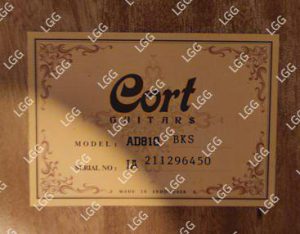
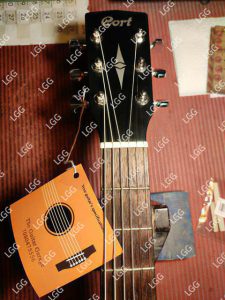
This Cort was brought to me only for a change of strings. As I quickly examined it, I realised that there was much more than dust and grime that needed to be cleaned off it.
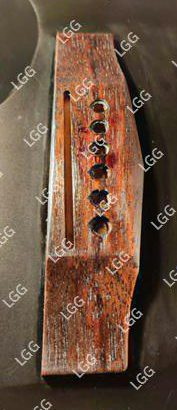
There was a jagged crack that ran almost the entire length of the bridge.
A crack like this begins (almost always) in between the bridgepin holes and is caused due to three or four reasons. One is when the hole is too small or the bridgepin is larger than usual. Invariably, string tension helps pull the wood fibres apart even as the bridgepin is pushing to make room for itself. This is the main reason.
A second reason is when the manufacturer uses inferior quality material for the bridge. A good hard wood like ebony, rosewood or walnut will resist the temptation to split under pressure for much longer than just any other dyed piece of wood. Not to say that the aforementioned woods will not split; they will but after much longer.
A third possible reason could be using strings far thicker than prescribed for a certain model of the instrument. Here in India, a majority of players are youngsters who are starting off, and while they are into their first-second guitars, the budget usually remains under Rs 17K (around $190). In fact, the lower the better.
In that range, one would be lucky to get a solid top. The back and sides are almost always laminate. So, in such an instrument, if one was to throw on 13s, they are most likely to create havoc with the bridgeplate, the bridge, the neck-to-heel joint and other such.
A little fun fact: the best selling guitar in India (from a reputed Japanese name) costs only around $100!!!! And in that $100, you even get a gig bag, a guitar strap, a few picks, an extra set of strings, and probably a string-winder too!!! I leave it to your imagination the quality of the guitar itself which comes with so many freebies for that price!
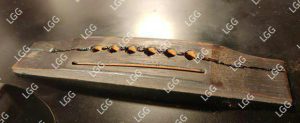
Anyway, I got working on what was before me and with some labour, it looked like this
With some more effort, it looked like this
But this bridge was a little different. Usually when I work on bridges, you can hardly make out that they have been worked on. Here the scar was painfully visible. But structurally it was solid.
The owner had tied a noose around the neck of the guitar. On my suggestion he got a strap button put on the heel of the guitar (the ideal place). Here is evidence that I did, in fact, put the strap button, though the photo with the strap button installed, I forgot to take!
Also, on my suggestion, the owner opted to get a bone nut and saddle installed in the guitar in place of the plastic crap already there.
If you look carefully enough, you will be able to see that it is already calibrated to where the height and width of both needed to come down to.
The owner chose these strings to throw on his redone guitar
And soon, all was well and the customer was happy!
I think I have worked on this instrument before – a set-up, bone nut and saddle – but I’m not very sure. But it recently came to me in this state, with the owner naturally none too happy.
He said that the instrument was in its case and when he took it out to play, he found it like this. From the looks of it, the break was along the seam of the neck joint, but it was a break. It wasn’t as if the seam had opened up.
But besides the obvious problem, it was also apparent that the guitar was dry to quite an extent. The bridge and the fretboard bore testimony to this.
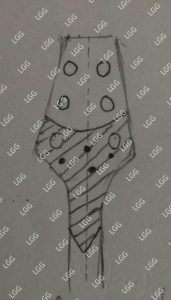
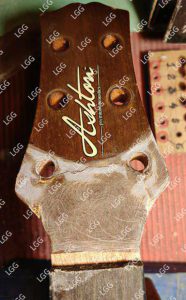
It seemed to me that the entire headstock was being held together by the cracked faceplate, which could have given way even by just trying to detune the guitar. I did that and in fact, took off the strings and the hardware on the headstock. Contrary to my fears, the two parts of the headstock stayed together, held by the faceplate.
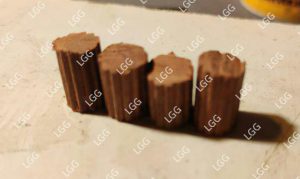
A simple glue-up job would have sufficed, but I thought that reinforcing the joint would not hurt anybody, least of all the instrument. So, I cut four dowels to place them along the seam of the break. These I called My Four Sentinels!!!
But first the glue-up. Glue was liberally applied and then equally painstakingly taken off as it oozed out of the joint under clamps.
Thereafter, I let the instrument sit undisturbed for two days. After that period, when I took off the clamps, I knew just by looking at the joint that it would hold but I wasn’t ready to take chances.
Holes were drilled to receive My Four Sentinels and they were glued in place.
These were then shaved off to make a seamless joint with the headstock.
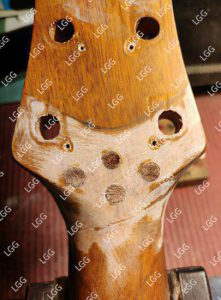
If you look closely enough, you will see a pencil line just beyond the two E string tuning machine holes. This was the line I drew to tell myself till where I needed to sand the entire surface.
Not very clear in the photograph, but I also drew a ‘V’ on the neck with its end point running in line with the centre line of the neck.
On the front face of the headstock too, there was a similar area marked. These had to be sanded for two reasons: a) to knock back any areas standing proud along the seam lines, and b) so that when paint is applied to the area, it has something to adhere to.
But before that the area had to be sanded
Of course, due care was taken that the name on the headstock face did not get damaged in the process.
Once this was done, the sanded area was painted dark and even got a coat of lacquer. The idea behind the effort was two fold: a) to hide the seam lines of the joint on the front and the back of the headstock, and b) to hide the existence of the dowels.
While I succeeded in my first mission, I failed in my second. My Four Sentinels still stood out proud!
To be fair, if you were to look at the instrument from even four feet away, you would not be able to pick up that the painted area was hiding a repair. It looked as if it was part of the headstock design. Besides, the owner was a stage artiste and to the first audience member, standing at least 15 – 20 feet away, nothing would be apparent.
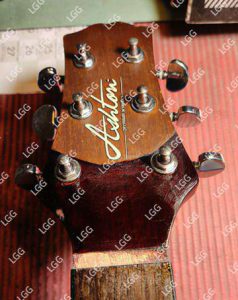
And there we were, at the moment of truth: stringing the guitar up to see if it could take the strain of strings tuned to pitch. The strings that the owner had chosen were these
I strung up the guitar, tuned it up, and left it for a day or two to see how the instrument would react under stress.
Just a small, quick one this Sunday but about a very disconcerting trend among the youth today. There is a shocking lack of basic information – about the acoustic guitars that people own, and just about everything that concerns them (the youth).
Day in and day out people (primarily youngsters) come to me and call the saddle the bridge, the nut ‘the white thing at the top’, don’t know the difference between the fretboard and the neck, not knowing what action is, not have any inkling about the specifics of the instrument that they own, and are happy to remain blissfully oblivious!
Paradoxical, wouldn’t you say that there are people like this around in today’s day and age when oceans of information, on everything under the sun, are available at the click of a mouse, or a swipe of a finger on the smartphone.
There’s nothing inherently wrong with not knowing the basics of things, only it makes one a sitting duck for unscrupulous elements in society. And they exist – and thrive – because the uninformed outnumber them 10 to one.
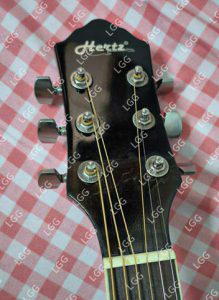
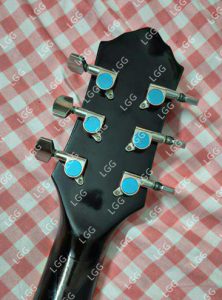
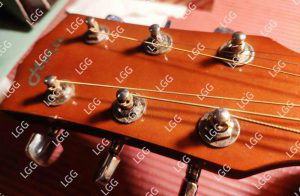
The other day a 27-28-year-old came to me with his guitar – a Hertz.
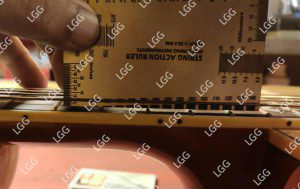
He said it was “very hard” (to play). One look at it and I had to agree that indeed, this would be hard to play
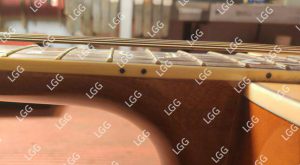
This is the 12th fret and you could easily push John Cena under there!
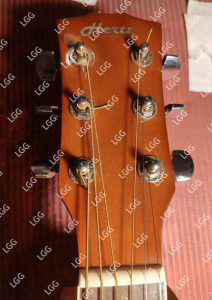
The other sticking point – literally – were the string ends with which you could murder a person, or else, be able to commit suicide with!
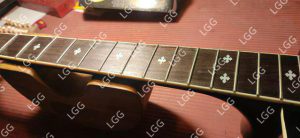
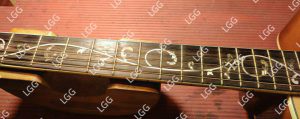
But it had a very pretty fretboard with abalone appointments
I checked things on the instrument and found that the relief in the neck would have been enough for five guitars!
Also, the saddle in the guitar had been put in the inverted position. The bass end of the saddle was towards the treble end of the bridge (and vice-versa)!
I pointed out the issues to the owner and asked him to return the next day to pick up the instrument.
I tried to coax him into getting a bone saddle and nut but he baulked at the idea as if I had asked him to take a sip from the toilet bowl. However, preferences – religious or otherwise – need to be respected.
After he left, I started working on the instrument. I loosened the strings (he didn’t wish to have them replaced) and pulled out the saddle from its groove, and to my amusement, only half came out with the other half securely lodged in the saddle slot!
And since the owner did not want a bone nut and saddle, and I had run out the plastic stuff, I asked him to get me a plastic saddle.
Meanwhile, I removed as much of the relief as I could. After the plastic saddle came in, I put it in, tuned up the guitar and took measurements. According to my measurements (.160 inches on the bass E string), more than half the saddle had to go for the owner to be able to play the instrument with some degree of comfort.
I did that which left just a sliver of the plastic thingy to hold up the strings.
Naturally, once I was done, the action stood at a very healthy spot.
Meanwhile, I also snipped off the string protrusions, giving a nice, neat look to the headstock.
Though the young man left satisfied, I urge all youngsters to read up, learn and become aware about everything that concerns them. You have nothing to lose and everything to gain!
Well, only I am to blame! Partly staying busy and a greater part, my laziness! Mea culpa!
I am here now and bring to you this Hertz that was brought to me by a returning customer.
It had some years on it but I could make out that once healed, it could play and sound good.
It’s problems? Well, the bridge was lifting and the saddle was tilting forward and had an odd curvature to it as it stood in its slot.
As a result, the action was sky high.
This was even though the owner had tried to shim the front face of the saddle in an effort to make the saddle stand straight.
I told the owner that once the bridge is reglued, the action will come down much, but once I make the saddle stand upright, it will again raise the action a bit. He understood.
I also told him that this would be the perfect time to get a bone nut and saddle installed, which would improve the sound of the instrument – in quality, volume and sustain. He understood that as well.
I began work with taking the strings off and as I tried to remove the saddle, it came out like this
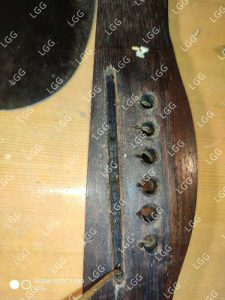
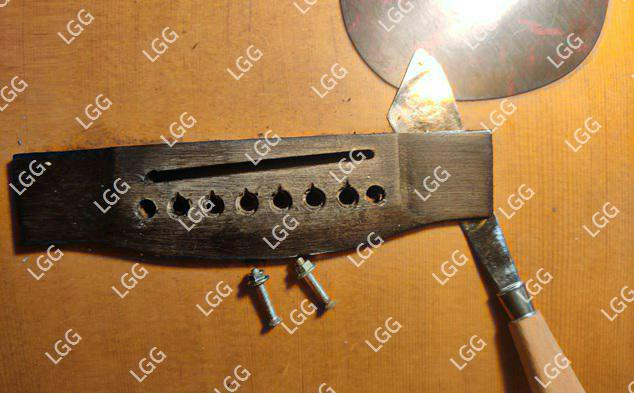
However, my main worry was the bolts and nuts hidden beneath the two plastic dots (on either side of the bridgepins) on the bridge. Look at the photograph showing the paper shim and you will know what I am talking about.
I have often dwelt upon the uselessness of this hardware, and also the fact that they do more harm than good. Good surface-to-surface contact, enough glue, enough clamping pressure, and enough curing time will ensure that the bridge lasts on the instrument for a good two or three decades! Bolts and nuts ensure that the top is torn apart, if the bridge begins to rise.
So, the hardware had to go. The plastic dots were gently prised out of their spots and the hardware was removed. I could almost hear the guitar let out a sigh of relief!!
Then began the task of gently trying to remove the bridge. It came off but not too clean, but not too bad either. I’ve seen worse.
Both the underside of the bridge and its footprint were cleaned, glue applied and stuck together with enough clamping pressure. After that I left the instrument to dry and rest.
Unfortunately, I have lost all the photographs I took of the process – right from cleaning the bridge and its footprint to the clamping and curing process. How it happened, I am still scratching my head.
Anyway, love was also shown to the fretboard, the fretwires and the bridge. Sanded clean and with a touch of oil, they shone.
Work was also done on the swanky, new bone saddle and nut to make them fit their slots perfectly, and once they were in place, new strings were put on to get the saddle to stand straight and for optimal action to be dialled in.
From here on, it was a saga of tuning and loosening strings as I tried to dial in the correct action at the 1st fret and the 12th fret.
Here are some photographs of the finished job
Most gratifying was the reaction of the owner to the changes to his guitar. He was mighty pleased with where the action stood and remarked ‘Bone se farak to bahut hai (Bone, indeed, makes a difference)!
There are times in guitar repair – as are in life – when you get the feeling that the Almighty is testing your patience and resolve!
A simple job like a bridge reglue, where you basically repeat steps that you have repeated umpteen times before to certain success, will yield horrifyingly discouraging results!
Take for example this Ibanez that came to me a couple of months ago.
Yes! It was presented before me exactly like this with the Hydra-like tentacles sticking out, as if searching for a prey to sting! There were other eyebrow raisers too.
The winds on the post left a lot to be desired
The nut slots were a little too deep for my liking
There was enough dust on the guitar to say that it had been in a state of disrepair for quite some time. The state of the strings also told a story of neglect, rusted and corroding as they were.
However, the main reason why it was on my counter was
this gap under the bridge through which you could drive a bus and park.
As I had told the owner, there were two options before him: 1) I could try and push glue under the bridge, clamp it shut, and hope it stuck, or, 2) take the proper route, take the bridge off, clean its underside as well as its footprint on the top and then reglue them. The owner chose to take the the “proper route”.
But before the bridge could come off, the strings had to come off. In that process occurred a tragedy and a discovery.
The bridgepin breaking off in its hole was the tragedy, while
the state of the fretboard was another instance of disregard for the instrument: dry and with months of grime caked on it.
But the task at hand was to reglue the lifting bridge, for which the bridge would have to be first removed. It came off, though grudgingly, but the more important fact was that it did not take much of the wood from the top.
What you see in the photograph below is evidence that random spillage of super glue was used to hold the bridge to the top. Whether it would hold for more than six months was no concern of the manufacturers.
What followed was the cleaning of both surfaces.
Once the top was cleaned of old CA glue and splinters, another problem presented itself.
The lifting bridge had managed to lift the top enough to create a step-like lift, right in the centre of where the bridge had to sit. This ‘step’ would not allow a proper surface to surface and contact and needed to be flattened for the bridge to sit correctly and stick securely to the top.
Repeated efforts over a few days and heat and pressure treatments flattened it out.
During the flattening process, I even checked inside the guitar to spot loose braces, but there were none. Satisfied, I proceeded to glue the bridge to the top.
And that is where trouble began.
After two days, I released it from the clamps, put on the strings chosen by the owner
After a day, I called the owner to come and collect the guitar. He came and happily took it away, only to send me a photograph, a day later, showing the bridge rising again.
I called the guitar in, told the owner, I will try to push glue under the bridge and clamp it shut, hoping that it would stick. If it did not, I would have to take off the bridge again, and reglue it all anew.
I pushed glue under the bridge and clamped it shut. When I released it from the clamps, I strung it up and waited for two days before again asking the owner to come and collect the instrument.
Before he could arrive, the bridge started lifting again!!!
I stopped the owner and waited for my exasperation to end – not talking to anyone. The next morning it was back to Block A – removing the bridge, cleaning both surfaces and reglueing.
This time it stuck. Why? Someone please tell me.
The same process, the same clamping pressure, same number of days left in clamps…
A troubled soul contacted me recently, asking if could repair his Mohan Veena. Now, to those who were enjoying teenage in the mid 90s, Pt Vishwa Mohan Bhatt winning the Grammy on his acoustic guitar improvisation – the Mohan Veena – was a big thing. At least to me it was. Why? I don’t know. His name and the name of the instrument just got stuck in my memory.
So, after all these years, fancy being bumped by a pleasant memory!
I took one look at it and I said that I would do it. The tailpiece had somehow split but it seemed a simple enough break. And so, I got to work – on the instrument and not just the tailpiece.
For the uninitiated, the Mohan Veena has umpteen strings (yeah, I didn’t bother to count), but most of those are sitar strings which pick up the resonance of the heavier strings vibrating above and start vibrating too (sympathetic vibrations). The instrument is played employing a slide.
I cut off all the strings and then cleaned each ferrule and string post. The fretboard – which doesn’t have any fretwires and sees no fretting – was cleaned too. The headstock was dusted, cleaned and polished and the floating bridge was cleaned and oiled.
Here are a few before and after photographs
The last photograph in this sequence shows a little interesting detail, Which I feel I must highlight.
At the nut and the bridge, there is no nut or saddle but a thin brass pipe, easily bent by a finger’s strength. That strings actually ride over these and do not crush them is rather interesting. Both of these were just sitting in their grooves, ready to fall off. With the owner’s permission, I glued these in so one could have two less pieces to worry about. But this was done not before I polished up the little brass pipes to a warm shine (You can see that in the last two photographs.
The tailpiece came last with both pieces going together perfectly, except for a little missing sliver of wood on the top of the tailpiece.
The two became one and so I thought
The owner happily took his instrument home, only to call me a couple of days later, and tell me that the joint had failed!
Interestingly enough, he had a second Veena, the back of which had come undone, and which someone had already tried to fix once and failed. I took a look at the globs of glue sitting in the open back and expressed my inability to be able to do anything with it.
Now this had a metal tailpiece.
To get the first Veena in working condition, it was decided to replace the broken tailpiece with the metal one. The operation was duly performed, and successfully at that.
A new (wooden) tailpiece has been ordered, and till such time as when it arrives, the metal one will have to hold strong.
This guitar came in recently with the lady owner complaining of fretwire buzz around the 10th fret – across the fretboard – but primarily on the ‘e’ string.
I took one look at the saddle and saw the saddle falling forward. Meanwhile, at the nut end of things, the slots seemed a little too deep for my liking.
I suggested to the owner that changing the nut and saddle to a set of proper dimensions, and that too of bone, should help solve the issue. A saddle standing straight in its slot, would raise up the strings automatically.
But before any of that happened, I had to put on my hazmat suit to clean the instrument.
And of course there’s always some DNA deposition on the fretboard
In this photograph, mark also the pitting that is beginning to occur on the fretwires. As is the case generally, it was more evident on the treble strings than on the bass strings.
So, first the strings were taken off and the fretboard was given a much-needed bath. Thereafter the brushing and oiling followed, giving the board a well-cared-for look.
Next, it was time to replace the nut and the saddle and dial in bone elements. The operative phrase here is ‘dial in’. For first-timers to the blog, or new to (acoustic) guitar maintenance, one does not throw out old nuts and saddles and replace them with new ones. One has to measure, cut and sand these two very important elements to the optimum so that playing and the sound produced thereof is soul-stirring.
In that line, measurements were taken and pleasantly enough, the nut was near perfect with just a couple of slots requiring lowering. The saddle, however, was a whole different story.
Following the radius of the fretboard, the saddle was shaped and put into the slot. It was strung up to find that the treble side was higher than desired. That was duly shaved off, after which the treble strings sat perfectly. Thereafter, the rest of the process of setting up the instrument followed. The relief was perfect and didn’t need to be touched,
Only the nut slots remained, which were attended to .