Guitar repair – Deja poo: same sh*t, all over again!

Remember how I say that the same kind of guitars, or, guitars with the same kind of problems seem to follow each other to my work table? Well, here is another prime example.

Some weeks back, this instrument came back to me

Those of you who are regular readers of my blog, will remember this one. For those of you who would like to read what work was done on this one, you can do so here

Guitar repair – why strings are imperative while diagnosing problems

The bridge split that had cured so handsomely, had returned to be worse than before.

And not just the cracking, the bridge was even lifting.

The owner was sure that he did not want the old bridge repaired but wanted a new one to take its place.

Easier said than done, as I learnt during the last repair. But if it had to be done, it had to be done!

As I was taking off the bridge, I realised that there was a belly behind it. For the new bridge to stick properly, one had to give it as flat a surface as one could possibly have.

So, the first thing that I did after the bridge came off, was to clamp it flat with some heavy duty clamps.

After 48 hours of remaining clamped, when the pressure was released, the results were pleasing

With the clamps off, I tried to figure out why the bridge had come loose and why it had cracked again. The tell-tale marks were found here

This crack in the top told me that it was this that helped create a crack in the bridge. However, a disconcerting thought crossed my mind. If a crack in the top aided a bridge crack, why could it not cause a crack in the bridgeplate too? My heart sank at the thought of a split bridgeplate.

If that was so, then it would be useless to replace the bridge on it, for that too would crack soon. I peered through the soundhole, keeping my fingers crossed, half expecting a big, old split to stare back at me, but thankfully, the bridgeplate was solid without any sign of trauma.

Quickly, I went about repairing the top, such that the split itself became invisible.

While I was working my mind was also searching for reasons why the bridge had lifted again. It was then that I saw it

This was a remnant of the spruce veneer of the multi layer top. It was amazing how evenly it had broken off, as if someone had cut it with an X-acto knife. You must forgive my mistaking it as a mark left by the bridge during the factory assembly process, when I removed the bridge the first time around. This little border of spruce prevented the bridge to stick to the top properly.

Now that I knew, I went about removing this border under lights and magnification. 

After spending about 45 minutes carefully removing the border, such that the finish remained undamaged, the footprint looked like this

Notice also that there is no sign of a crack in the top!

Thereafter began the process of glueing the bridge to the top. As I placed the new bridge on the old footprint the holes refused to match. If I matched the holes, there was something like a 2 mm of the bridge footprint exposed behind the bridge three-fourth of the way.

There was nothing to be done except plug the holes and redrill new ones.

Out came the violin sound posts and I went to work. Cutting each plug in line with the top and then sanding it flush, slow and tediously, the job got done in the end.

With everything else in place, it was time to slap on the bridge

The entire exercise ended two days later when the clamps came off. The fretboard and the dry, new bridge were given a coat of love, and a new saddle was put in place of the old bent saddle.

The owner decided to put in strings on his own and so that is  how the instrument was returned – without strings but with the saddle standing in its slot!

Guitar repair – #ashton: when a repair just isn’t possible!

A while back  this #ashton came to me in this state

Not only was the bridge split through the line of the bridgepin holes, a (possibly) leaning saddle had also split it open in line with the saddle slot. See? If that was not enough, the bridge was lifting so much, I had to probe and poke to see what was holding it on!

If it had been just one of the splits and not both together, I would have still repaired  the bridge, why, you will learn soon. But this one was beyond redemption and just had to go.

It wasn’t a bad guitar and the construction quality was quite alright, except for the dry fretboard,

quite a common ailment in the instruments that come to me, but even the best guitars can fall apart if not taken care of properly.

With this #ashton, there was nothing which could be done except replace the bridge. Now, I am always wary of replacing bridges for I don’t have the space to possess the wherewithal to fabricate a bridge from a piece of wood. I am left with two or three shapes of bridges that are available in the market.

Given the number of guitar companies out there, each bridge is slightly different, and if I have to replace a bridge, I choose the one closest in shape and size to the original.

But first the original bridge needed to come off and it did pop off though the (CA) glue used to fix it to the top refused to let part of the bridge part with it.

After the partial cleaning, the bridge footprint looked like this

There was still lots of CA glue deposited on it, which needed to be removed, but more on that later.

Without the bridge on, I could plainly see that string tension had worked on the bridgeplate and a not-very-good-quality bridge, causing it to split. Just from the outside, I was sure that the bridgeplate too would have been split, but peering inside, I was happy to note that that tragedy had not struck. The bridgeplate, though, had buckled somewhat under string tension.

So, the next logical step was to remove the belly and try to straighten out the bridgeplate.

While this process was on, I selected a bridge that could replace the original

The replacement bridge had bridgepin holes marked but they had to be drilled through. That was done and then the diameter of the holes was checked by pushing bridgepins through them, to see where they sat.

Almost all holes needed to be reamed, and so, each hole was reamed some till the bridgepins sat perfectly.

Then I tried setting it on the guitar itself by pushing two outside bridgepins through the bridge and the top.

Carefully inspect the corner of the bridge closest to you. Do you see it?

While the ‘e’ bridgepin hole lined up perfectly with the hole in the top, the other five moved progressively inside the line of the holes in the top. The only solution was to plug the original holes in the top, stick the bridge and then redrill the holes, so that the bridge sat in the right place (without affecting the intonation). AND THAT IS EXACTLY WHY I DITHER FROM REPLACING BRIDGES!

So, I went about plugging the holes with these spruce wood violin sound posts which I had bought many, many moons ago, because I knew one day I might have use for them – exactly for this purpose. That day had come.

Very briefly, sound posts are installed inside violins and other instruments belonging to the violin family (violin, viola, cello, double bass). Not only does the sound post support the top of the instrument, it can also alter the tone dramatically, and completely change the sound depending on the position or angle.

While I enlarged the holes in the top a bit to receive the posts, I sanded the posts themselves a bit so that the fit would be a snug one.

After all the holes were plugged they were cut and sanded flush, such that if one ran a finger along them, he would not feel even the slightest lip.

Now the stage was set for the new bridge to be stuck to the top. I did that and made it sit perfectly on the footprint of the original bridge, but – believe it or not – forgot to take photographs of the process!!!

Anyway, the bridge stayed in clamps for two days, during which other areas of the instrument were given love: the headstock, the hardware on it, the fretboard, the fretwires…

Fretboard being cleaned of dirt and grime deposits

After the clamps came off, new holes were carefully drilled and the new, very dry bridge was given a coat of love which made it shine, while making the grain in it pop out.

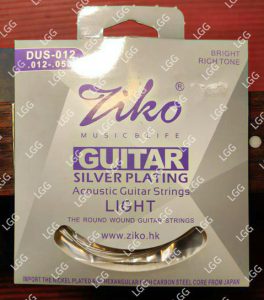
All that was left to do was to string up the instrument and see if everything was in order. The owner had chosen these strings for his guitar.

Here are the final few parting shots of the #ashton, looking every bit the billion dollars it wasn’t! The bottom line though, was that the owner was mighty pleased with the results.

Oh! Did I mention that the instrument got a lovely set of bone nut and saddle too? It did!! 


Guitar repair – If only there weren’t any #yamaha F310s!

And I’m back after a break!

HAPPY NEW YEAR, FOLKS!!! May the year be one of fulfilment, peace, happiness and prosperity!

Some time ago, this older #Yamaha F310 came to me with a complaint of action so high that it was unplayable beyond the 5th, 6th fret.

It had a rising bridge,

which in the process of its lift,

had pulled the top too along with it, giving the instrument a more-than-healthy belly. A look inside showed the main cause of the problem – the ‘X’-brace arm on the bass side had come unglued.

Seeing the loose brace, the belly and the rising bridge, I was pretty confident that the action problem could be solved pretty easily. That was my undoing.

More on that later.

I started work with taking the old strings and the bridge off the guitar.

Not the cleanest of jobs I have done, yet nothing that I could not remedy. So, the first order of business was to get all the fibers of the top glued down to create an even surface for the bridge to reglue to.

Once this was taken care of, I reglued the loose ‘X’ brace arm, which to my understanding, was the main cause of the belly bulge and action.

The reflection in the mirror shows the brace pushed against the top, and if you look really carefully, you’ll be able to see the glue squeeze-out too.

After this was taken care of, work to cut the belly down to size began.

With each 48-hour effort, the belly was reduced some. The following photographs show the results of the last two efforts

Once I was satisfied with the results, it was time to bring the bridge and the top together. 

And while the bridge remained clamped for another 48 hours, it gave me time to work on other neglected areas of the instrument – like the fretboard.

Oh, and there was also an under-saddle pick-up attached, which the owner felt had outlived its utility. He asked me to remove it. Removing the under-saddle piezo element meant creating a shortfall in the height of the saddle. 

Considering all the work done on the guitar, I was sure that the saddle without the piezo element would fall terribly short and would have the strings flapping around on the fretboard. So, I buttressed the saddle not with one, not with two, but with three plastic shims. It helped that #yamaha uses plastic nuts and sadddles in the F310.


Now, all that remained to be done was to string up the instrument. The owner had chosen these

I tuned up the guitar and to my horror, it had an action high enough for a double-decker bus to pass under! I tried shaving the saddle, I tried fiddling with the truss rod, I even dialled in a lower than usual action at the first fret, but all these brought about mere cosmetic alterations. 

It was then that my attention went to how and why the top under the fretboard extension had broken loose and was jutting forward in the soundhole.

I could make out that the neck block inside the guitar had come loose, and tilted forward, and with it moved the portion of the top under it. In fact, so severe was the move that the portion of the sides glued to the neck block had also moved – just about an inch on either side and along the very top of the neck-to-heel joint. I forgot to take photographs of it.

My earlier thinking that I would just be able to tap the neck block back into place, after smearing some glue behind it was grossly flawed.

Unfortunately, the neck block must have moved under string tension during the months of extreme heat, when the glue must have melted somewhat. The glue then dried on the block, sealing it in a tilted position, pulling forward everything in its contact, thus leaving no room for intervention.

The only way to solve the problem was a proper neck reset, which was too much for this old guitar – the owner’s first. As sentimental value goes, the owner would have to continue to play up until the 5th, 6th fret – after all the time and effort put into the instrument. 

Though each instrument which I fail to correct, saddens me, this one was probably the saddest of all, for I knew that the owner had set his heart on playing his beloved guitar right up and down the neck and not just on the first five frets!