Guitar repair – Without some basic instrument knowledge, you’re sure to be fooled!

Just a small, quick one this Sunday but about a very disconcerting trend among the youth today. There is a shocking lack of basic information – about the acoustic guitars that people own, and just about everything that concerns them (the youth).

Day in and day out people (primarily youngsters) come to me and call the saddle the bridge, the nut ‘the white thing at the top’, don’t know the difference between the fretboard and the neck, not knowing what action is, not have any inkling about the specifics of the instrument that they own, and are happy to remain blissfully oblivious!

Paradoxical, wouldn’t you say that there are people like this around in today’s day and age when oceans of information, on everything under the sun, are available at the click of a mouse, or a swipe of a finger on the smartphone.

There’s nothing inherently wrong with not knowing the basics of things, only it makes one a sitting duck for unscrupulous elements in society. And they exist – and thrive – because the uninformed outnumber them 10 to one.

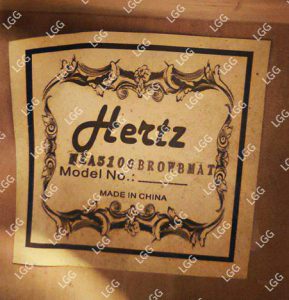
The other day a 27-28-year-old came to me with his guitar – a Hertz.
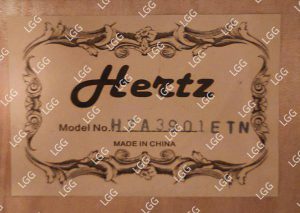
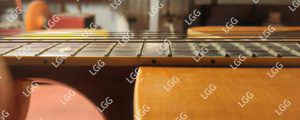
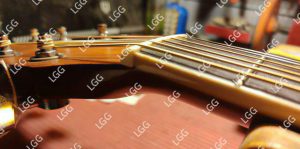
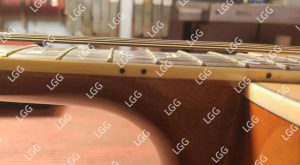
He said it was “very hard” (to play). One look at it and I had to agree that indeed, this would be hard to play
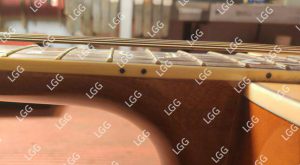
This is the 12th fret and you could easily push John Cena under there!

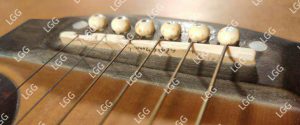
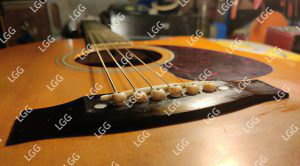
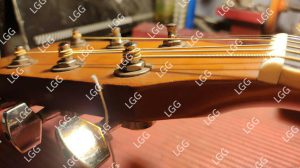
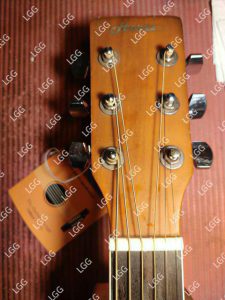
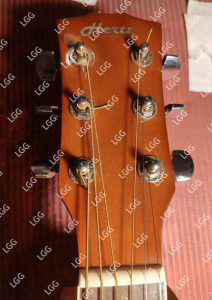
The other sticking point – literally – were the string ends with which you could murder a person, or else, be able to commit suicide with!
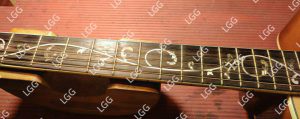
But it had a very pretty fretboard with abalone appointments
I checked things on the instrument and found that the relief in the neck would have been enough for five guitars!
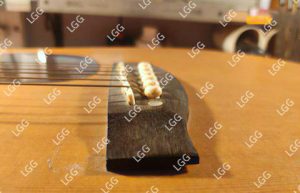
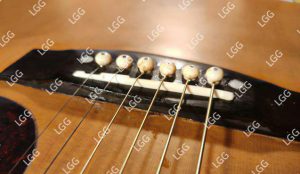
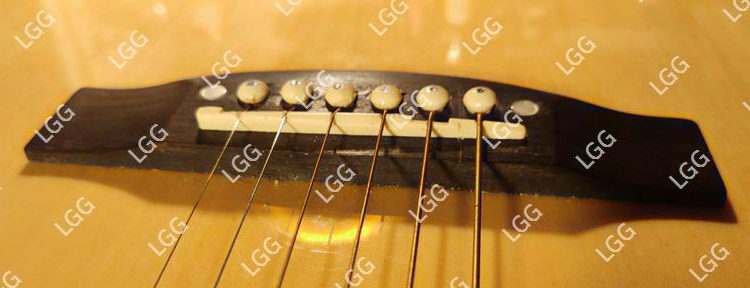
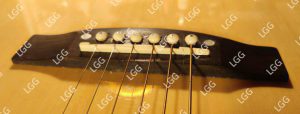
Also, the saddle in the guitar had been put in the inverted position. The bass end of the saddle was towards the treble end of the bridge (and vice-versa)!
I pointed out the issues to the owner and asked him to return the next day to pick up the instrument.

I tried to coax him into getting a bone saddle and nut but he baulked at the idea as if I had asked him to take a sip from the toilet bowl. However, preferences – religious or otherwise – need to be respected.

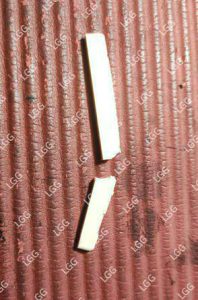
After he left, I started working on the instrument. I loosened the strings (he didn’t wish to have them replaced) and pulled out the saddle from its groove, and to my amusement, only half came out with the other half securely lodged in the saddle slot!

And since the owner did not want a bone nut and saddle, and I had run out the plastic stuff, I asked him to get me a plastic saddle.

Meanwhile, I removed as much of the relief as I could. After the plastic saddle came in, I put it in, tuned up the guitar and took measurements. According to my measurements (.160 inches on the bass E string), more than half the saddle had to go for the owner to be able to play the instrument with some degree of comfort.

I did that which left just a sliver of the plastic thingy to hold up the strings.
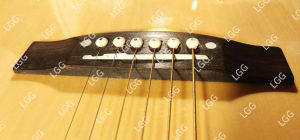
Naturally, once I was done, the action stood at a very healthy spot.
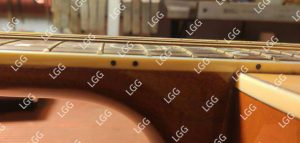
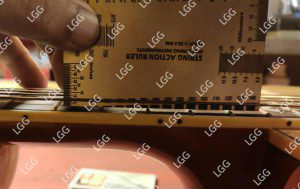
Meanwhile, I also snipped off the string protrusions, giving a nice, neat look to the headstock.
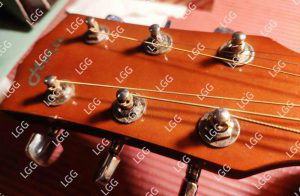
Though the young man left satisfied, I urge all youngsters to read up, learn and become aware about everything that concerns them. You have nothing to lose and everything to gain!

UNTIL NEXT TIME, FOLKS!


Guitar repair – This Hertz: it hurts no more!

Hello there, beautiful people!

Long time no see. Long time no hear!

Well, only I am to blame! Partly staying busy and a greater part, my laziness! Mea culpa!

I am here now and bring to you this Hertz that was brought to me by a returning customer.

It had some years on it but I could make out that once healed, it could play and sound good.

It’s problems? Well, the bridge was lifting and the saddle was tilting forward and had an odd curvature to it as it stood in its slot.

As a result, the action was sky high.

This was even though the owner had tried to shim the front face of the saddle in an effort to make the saddle stand straight.

I told the owner that once the bridge is reglued, the action will come down much, but once I make the saddle stand upright, it will again raise the action a bit. He understood.

I also told him that this would be the perfect time to get a bone nut and saddle installed, which would improve the sound of the instrument – in quality, volume and sustain. He understood that as well.

I began work with taking the strings off and as I tried to remove the saddle, it came out like this

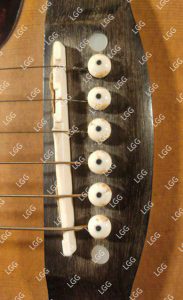
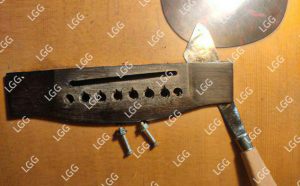
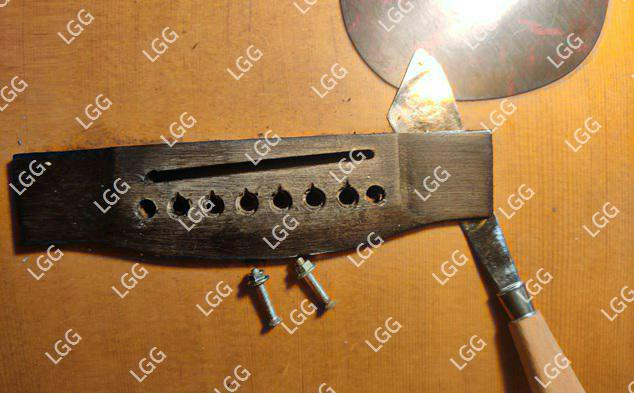
However, my main worry was the bolts and nuts hidden beneath the two plastic dots (on either side of the bridgepins) on the bridge. Look at the photograph showing the paper shim and you will know what I am talking about.

I have often dwelt upon the uselessness of this hardware, and also the fact that they do more harm than good. Good surface-to-surface contact, enough glue, enough clamping pressure, and enough curing time will ensure that the bridge lasts on the instrument for a good two or three decades! Bolts and nuts ensure that the top is torn apart, if the bridge begins to rise.

So, the hardware had to go. The plastic dots were gently prised out of their spots and the hardware was removed. I could almost hear the guitar let out a sigh of relief!!

Then began the task of gently trying to remove the bridge. It came off but not too clean, but not too bad either. I’ve seen worse.

Both the underside of the bridge and its footprint were cleaned, glue applied and stuck together with enough clamping pressure. After that I left the instrument to dry and rest.

Unfortunately, I have lost all the photographs I took of the process – right from cleaning the bridge and its footprint to the clamping and curing process. How it happened, I am still scratching my head.

Anyway, love was also shown to the fretboard, the fretwires and the bridge. Sanded clean and with a touch of oil, they shone.

Work was also done on the swanky, new bone saddle and nut to make them fit their slots perfectly, and once they were in place, new strings were put on to get the saddle to stand straight and for optimal action to be dialled in.

From here on, it was a saga of tuning and loosening strings as I tried to dial in the correct action at the 1st fret and the 12th fret.

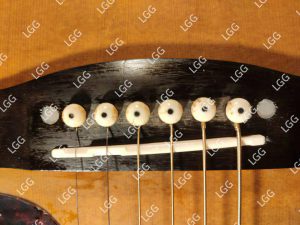
Here are some photographs of the finished job

Most gratifying was the reaction of the owner to the changes to his guitar. He was mighty pleased with where the action stood and remarked ‘Bone se farak to bahut hai (Bone, indeed, makes a difference)!

Hope to see you all here, soon!